
.jpeg)
What is the therapeutic effect of giritinib targeted drug?
Giritinib, as a targeted drug targetingFLT3 mutations, has attracted much attention in recent years in the treatment of specific types of leukemia, especially acute myeloid leukemia (AML).
In a phase 3 trial involving geritinib demonstrated significant therapeutic efficacy in 371 adult patients with relapsed or refractory FLT3-mutated AML. Trial data showed that the median overall survival of the patient group receiving giritinib (dose 120 mg/day) was 9.3 months, which was significantly longer than the 5.6 months of the patient group receiving salvage chemotherapy. In addition, the median event-free survival in the geritinib group was 2.8 months, compared with only 0.7 months in the chemotherapy group. These data fully demonstrate that giritinib can significantly prolong patient survival.
In addition to extending survival, giritinib also showed higher response rates. In the above-mentioned Phase 3 trial, 34% of patients in the gilitinib group achieved complete remission and had complete or partial hematological recovery, while only 15.3% of patients in the chemotherapy group achieved complete remission. This means that giritinib can control the disease more effectively and enable more patients to achieve clinical remission.
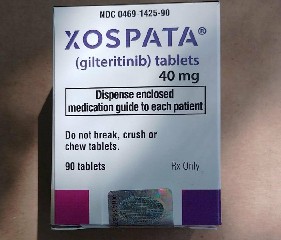
Giritinib, as aFLT3 inhibitor, is highly specific for AML patients with FLT3 mutations. FLT3 mutation is one of the most common gene mutations in AML and is closely related to the prognosis of the disease. Giritinib binds to FLT3 kinase and blocks the signaling of leukemia cells, thereby inhibiting their growth and spread. This specific mechanism of action gives giritinib a unique advantage in the treatment of FLT3-mutated AML.
The safety and tolerability of giritinib have also been verified in clinical trials. Although some patients may experience some adverse reactions during the use of giritinib, such as myalgia, arthralgia, elevated transaminases, etc., most of these reactions are predictable and manageable. Doctors will adjust the drug dosage and treatment plan according to the patient's specific conditions to ensure the effectiveness and safety of the treatment.
The targeted mechanism of action of giritinib can reduce patients' symptoms, such as fatigue and fever, thereby improving the patient's quality of life. For patients who are too frail to undergo surgery, radiation or chemotherapy, giritinib offers a relatively mild and effective treatment option.
Continued treatment with giritinib can lead to sustained remission. In clinical trials, some patients achieved long-term remission after maintenance treatment with giritinib. In addition, patients treated with gilitinib for maintenance therapy after hematopoietic stem cell transplantation also showed a stable safety profile, which provides strong support for further consolidating the therapeutic effect.
It’s important to note that each patient’s specific situation is different. Therefore, during the actual treatment process, doctors will make individual adjustments to the course of giritinib based on factors such as the patient's response, side effects, and disease severity. This personalized treatment plan design ensures that patients receive the best treatment results.
[ 免责声明 ] 本页面内容来自公开渠道(如FDA官网、Drugs官网、原研药厂官网等),仅供持有医疗专业资质的人员用于医学药学研究参考,不构成任何治疗建议或药品推荐。所涉药品可能未在中国大陆获批上市,不适用于中国境内销售和使用。如需治疗,请咨询正规医疗机构。本站不提供药品销售或代购服务。


