
.jpeg)
Will there be no recurrence after taking teriflunomide?
Multiple sclerosis (MS) is a complex autoimmune disease whose course is often accompanied by recurrent attacks and remissions. In recent years, with the deepening of medical research, various new therapeutic drugs have been continuously introduced. Among them, teriflunomide (Aubagio), as an immunomodulator, has achieved remarkable results in the treatment of multiple sclerosis. However, patients are concerned about whether the use of teriflunomide means no recurrence, and this article will introduce it.
First of all, the mechanism of action of teriflunomide is to inhibit the activity of dihydroorotate dehydrogenase (DHODH), thereby blocking the de novo pyrimidine synthesis pathway, affecting DNA synthesis and cell proliferation. In the pathological process of multiple sclerosis, activated immune cells (such as T lymphocytes and B lymphocytes) are the main culprits causing inflammation and nerve damage. Teriflunomide treats multiple sclerosis by inhibiting the proliferation and activity of these cells, reducing their attack on the nervous system.
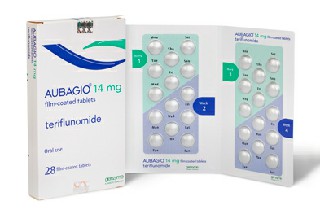
To be clear, however, teriflunomide does not completely eliminate the risk of MS relapse. Although the drug can significantly reduce the number and severity of relapses in patients, it does not guarantee that patients will not relapse after using it. This is because the pathogenesis of multiple sclerosis is complex and involves the interaction of multiple genes and environmental factors. Therefore, even when effective drugs such as teriflunomide are used, patients still need to remain vigilant and undergo regular condition monitoring and evaluation.
In addition, there are certain risks associated with the use of teriflunomide. This drug may cause some side effects, such as abnormal liver function and increased risk of infection. Therefore, before using teriflunomide, patients need to undergo a comprehensive physical examination and evaluation to ensure they meet the medication requirements. At the same time, during the medication process, patients need to pay close attention to their own reactions and changes in condition, communicate with their doctors in a timely manner and adjust the treatment plan.
In conclusion, teriflunomide plays an important role in the treatment of multiple sclerosis as a potent immunomodulator. However, it does not completely eliminate the risk of recurrence. Therefore, while using teriflunomide, patients also need to pay attention to regular examinations and avoid exposure to triggering factors to reduce the risk of recurrence and improve quality of life.
After enquiry, teriflunomide has been sold in China. Please consult the local hospital pharmacy for specific prices. There are also generic drugs overseas, which cost about a few hundred yuan per box. Patients should choose according to their needs.
[ 免责声明 ] 本页面内容来自公开渠道(如FDA官网、Drugs官网、原研药厂官网等),仅供持有医疗专业资质的人员用于医学药学研究参考,不构成任何治疗建议或药品推荐。所涉药品可能未在中国大陆获批上市,不适用于中国境内销售和使用。如需治疗,请咨询正规医疗机构。本站不提供药品销售或代购服务。


