
.jpeg)
Is Asiminib effective for patients with chronic myelogenous leukemia?
For patients with chronic myelogenous leukemia, the clinical efficacy of Asciminib (Asciminib) is very significant.
Aximinib is a STAMP inhibitor whose mechanism of action is different from traditional tyrosine kinase inhibitors (TKI). Aceminib specifically targets the myristoyl pocket (STAMP) of ABL1 to inhibit it. This unique action The method allows Aceminib to effectively alleviate the resistance of TKIs to chronic myelogenous leukemia (CML). Compared with traditional TKIs, aceminib can reduce the sensitivity to TKIs, thereby improving the treatment effect and bringing better prognosis to patients.
Aximini is mainly used to treat patients with the chronic phase (CP) of Philadelphia chromosome-positive chronic myelogenous leukemia (Ph+ CML). Especially for patients who have received two or more TKI treatments, as well as patients with the T315I mutation, aceminib showed higher efficacy.
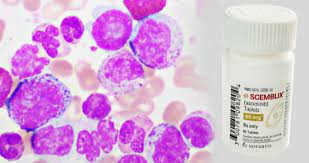
To more specifically illustrate the efficacy of aceminib, we can refer to some key clinical trial data. In an open-label, phase 1, non-randomized trial, aceminib monotherapy was evaluated in 115 patients with CML-CP without T315I. After a median of approximately 4 years of treatment, 69.6% of patients were still taking aceminib, demonstrating the drug's continued efficacy and good tolerability. Among patients who did not experience a specified response at baseline, 61.3% had BCR::ABL1 reduced to 1%Following, 61.6% of patients achieved major molecular response (MMR), which is a very important efficacy indicator. In addition, 33.7% of patients achieved an excellent response with an international score of ≤0.01%, which further proves the significant efficacy of aceminib.
In another pivotal Phase 3 clinical trial (the ASCEMBL study), aximinib was directly compared with bosutinib. The results showed that in patients treated with aceminib, the MMR rate at 24 weeks was significantly higher than that in the control group. This data not only validates the effectiveness of aceminib, but also highlights its advantages in treating refractory CML patients.
In addition to its remarkable efficacy, aceminib also demonstrated good safety and tolerability. In clinical trials, most adverse reactions are controllable and predictable. This makes Asiminib a reliable option for patients with CML. Of course, like other drugs, Aceminid may also cause some side effects, such as high blood pressure, gastrointestinal reactions, etc. But as long as the patient takes the medication under the guidance of a doctor, these side effects can usually be effectively controlled.
Although the efficacy of aceminib is remarkable, the issue of drug resistance also needs attention. As each patient has different drug accumulation and drug sensitivity, resistance to aceminib varies from person to person. In order to overcome this problem, doctors will adjust the medication plan according to the patient's specific situation, such as using combined medication or dressing changes.
As a new targeted drug, Aceminib has shown significant efficacy and good safety and tolerability in the treatment of chronic myelogenous leukemia. Its unique mechanism of action enables aceminib to more effectively alleviate resistance to TKIs and improve therapeutic efficacy. Although drug resistance is a problem, it can be managed with rational treatment strategies and comprehensive management. Aceminib therefore provides a new, effective treatment option for patients with CML.
[ 免责声明 ] 本页面内容来自公开渠道(如FDA官网、Drugs官网、原研药厂官网等),仅供持有医疗专业资质的人员用于医学药学研究参考,不构成任何治疗建议或药品推荐。所涉药品可能未在中国大陆获批上市,不适用于中国境内销售和使用。如需治疗,请咨询正规医疗机构。本站不提供药品销售或代购服务。


