
.jpeg)
Early application study of ivonib (ivitinib) in patients with acute pancreatitis
Ivonib (ivitinib), as a new generation of small molecule IDH inhibitors, has emerged in the field of cancer treatment in recent years. However, there are relatively few studies on its early use in patients with acute pancreatitis.
Ivonib mainly restores the normal differentiation and apoptosis functions of cells by inhibiting the mutation activity of isocitrate dehydrogenase-1 (IDH1). This mechanism has been widely recognized in cancer treatment, but for the treatment of acute pancreatitis, its potential mechanism may involve reducing the inflammatory response and protecting pancreatic cells from further damage.
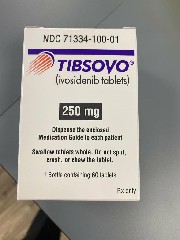
Acute pancreatitis is a severe inflammatory disease with complex pathogenesis involving the release of multiple inflammatory mediators and autodigestion of pancreatic tissue. At present, the conventional treatment of acute pancreatitis mainly includes fasting, fluid replacement, analgesia and anti-infective treatment. However, these conventional treatments are often ineffective in patients with severe acute pancreatitis, so new treatments need to be explored.
As a drug with anti-inflammatory and anti-tumor effects, ivonib may have certain potential in the early application of acute pancreatitis. By inhibiting the mutational activity of IDH1, ivosidenib may be able to reduce the inflammatory response in pancreatic tissue, protect pancreatic cells from damage, and promote the repair and regeneration of pancreatic tissue.
However, there are still some challenges in the early application research of ivonib in acute pancreatitis. First, more clinical trials are needed to verify the efficacy and safety of ivonib in acute pancreatitis. Secondly, it is necessary to further study the specific mechanism of action of ivonib in acute pancreatitis to better guide clinical application.
[ 免责声明 ] 本页面内容来自公开渠道(如FDA官网、Drugs官网、原研药厂官网等),仅供持有医疗专业资质的人员用于医学药学研究参考,不构成任何治疗建议或药品推荐。所涉药品可能未在中国大陆获批上市,不适用于中国境内销售和使用。如需治疗,请咨询正规医疗机构。本站不提供药品销售或代购服务。


