
.jpeg)
Clinical application of ivonib (ivitinib) in the treatment of insulin-resistant type 1 diabetes
Small moleculeIDHThe inhibitor ivonib (ivitinib) has attracted widespread attention in the field of tumor treatment in recent years. The drug was approved by the U.S. Food and Drug Administration (FDA) for the treatment of relapsed or refractory acute myeloid leukemia and cholangiocarcinoma harboring IDH1 mutations, providing a new treatment option for these patients. However, the use of ivonib in glioma is still in the exploratory stage, although early clinical trials have shown some promise.
Glioma is a common central nervous system tumor, and some of them carry IDH mutations. Currently, treatments for this type of mutated glioma are relatively limited, and neuro-oncologists have been seeking new treatments. As a small molecule inhibitor targeting IDH mutations, ivonib has attracted much attention for its potential in the treatment of glioma.
A retrospective case series study was conducted to further explore the therapeutic efficacy of ivonib in IDHmutated gliomas. The study was conducted in a single cancer care setting and detailed data on patient demographics, type of IDH mutation, treatment history before starting ivosidenib, duration of treatment, and progression-free survival.
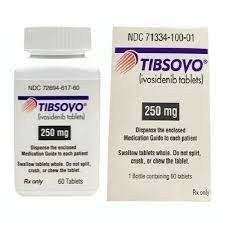
Research results show that from2018year8 months to2022year12 During months, we identified 13patients with IDHmutated gliomas who were taking 500mg of ivonib per day. However, 4 patients failed to receive treatment: 2 patients became too ill to continue treatment shortly after being prescribed ivonib, and 2 patients discontinued treatment because they were unable to obtain health insurance.
Under treatmentAmong the 9 patients, the median age was 37 years old (age range: 25-44 years old), including 8 men and 1 women. Among these patients, 5 carryIDH1 R132Hmutation and 1p19q intact, and 4 people carrying both IDH mutation and 1p19q co-deletion. The highest grade of tumors in all patients was 3 grade. Of note, 4 patients showed only nonenhancing disease.
These patients had received a median of 2 treatments (range 0-5) before starting treatment with ivosidenib. There were 3 patients who had not received radiation therapy when they started taking ivonib, and 2of these patients even used the drug as first-line treatment at medical institutions other than MD Anderson.
The disease control rate (that is, the proportion of all patients with stable disease) reached 78%. After a median follow-up of 17.8 months (range 15-29 months), we found that the median progression-free survival (mPFS) is 3.81 months (95% confidence interval: 1.25-12.78 months). Notably, progression-free survival was significantly better in patients with non-enhancing disease than in patients with enhancing disease, although this difference was not statistically significant (median PFS was 8.28, respectively) an>months and 3.81months, pvalue=0.42).
In terms of safety, only 2 patients experienced adverse events: 1Grade 1 lethargy symptoms, while another 1 patient developed grade Grade 3 surgical wound infection unrelated to the drug, requiring treatment to be suspended. Overall, ivonib demonstrated efficacy and an acceptable safety profile in patients with gliomas harboring IDH mutations.
[ 免责声明 ] 本页面内容来自公开渠道(如FDA官网、Drugs官网、原研药厂官网等),仅供持有医疗专业资质的人员用于医学药学研究参考,不构成任何治疗建议或药品推荐。所涉药品可能未在中国大陆获批上市,不适用于中国境内销售和使用。如需治疗,请咨询正规医疗机构。本站不提供药品销售或代购服务。


