
.jpeg)
A must-read for patients: An overview of basic information in the instructions for nintedanib
1. Common name: Nintedanib,Nintedanib
Product name: Vigat,Ofev
2. Who can take nintedanib? Indications?
Nintedanib is indicated to treat the following conditions:
1. Idiopathic pulmonary fibrosis (IPF): Nintedanib is suitable for the treatment of idiopathic pulmonary fibrosis in adults;
2. Chronic fibrosing interstitial lung disease with a progressive phenotype (ILD): Nintedanib is suitable for the treatment of adult patients with chronic fibrosing interstitial lung disease with a progressive phenotype;
3. Systemic sclerosis-related interstitial lung disease (SSc-ILD): Nintedanib is believed to slow the decline in lung function in adult patients with systemic sclerosis-related interstitial lung disease.
3. What are the side effects of nintedanib?
The most common side effects of nintedanib are diarrhea, nausea, vomiting, abdominal pain, decreased appetite, and weight loss. After being put on the market, drug-induced liver injury, bleeding, proteinuria, pancreatitis, rash, and itching have also appeared.
4. How should you take nintedanib?
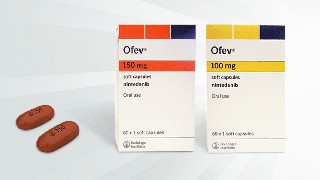
The recommended dose of nintedanib is 150 mg orally administered twice daily, approximately 12 hours apart. Nintedanib capsules should be taken with food and swallowed whole with liquid and should not be chewed due to the bitter taste. If contact with capsule contents occurs, wash hands immediately and thoroughly. If a dose of nintedanib is missed, the next dose should be taken at the next scheduled time. Advise patients not to make up missed doses. Do not exceed the recommended maximum daily dose of 300 mg.
5. How to store nintedanib?
Nintedanib is available in capsule form and can be stored at 20°C to 25°C (68°F to 77°F); tolerances to 15°C to 30°C (59°F to 86°F) are permitted. Avoid exposure to high humidity and avoid overheating. If repackaging, use airtight containers.
6. How does nintedanib work?
Nintedanib is a small molecule that inhibits multiple receptor tyrosine kinases (RTKs) and non-receptor tyrosine kinases. Nintedanib inhibits the following RTKs: platelet-derived growth factor receptor (PDGFR) alpha and beta, fibroblast growth factor receptor 1-3, vascular endothelial growth factor receptor-3, colony-stimulating factor 1 receptor (CSF1R), and Fms-like tyrosine kinase-3 (FLT-3). With the exception of FLT-3, these kinases have been implicated in the pathogenesis of interstitial lung disease (ILD).
Nintedanib competitively binds to the adenosine triphosphate (ATP) binding pocket of these kinases and blocks intracellular signaling cascades that have been shown to be involved in the pathogenesis of fibrotic tissue remodeling in ILD. Nintedanib also inhibits the following nRTKs: Lck, Lyn, and Src kinases. The role of FLT-3 and nRTK inhibition on the efficacy of nintedanib in the treatment of ILD is unclear.
7. What will happen if you overdose on nintedanib?
In a trial of IPF, a patient was inadvertently exposed to a dose of 600mg for 21 days. One non-serious adverse event (nasopharyngitis) occurred and resolved during incorrect dosing, and there were no other reported events. Overdoses were also reported in two patients in the oncology study who were exposed to a maximum dose of 600 mg twice daily for 8 days. The reported adverse events are consistent with the existing safety profile of nintedanib. Both patients have recovered. In case of overdose, interrupt treatment and initiate appropriate general supportive measures.
[ 免责声明 ] 本页面内容来自公开渠道(如FDA官网、Drugs官网、原研药厂官网等),仅供持有医疗专业资质的人员用于医学药学研究参考,不构成任何治疗建议或药品推荐。所涉药品可能未在中国大陆获批上市,不适用于中国境内销售和使用。如需治疗,请咨询正规医疗机构。本站不提供药品销售或代购服务。


