
.jpeg)
List of instructions for Osimertinib/Tagressa
1. Generic name: Osimertinib , Osimertinib
Product name: Tagrisso, Tagrisso
Other names: AZD9291, osimertinib mesylate tablets, Tagris, osimertinib, Tagesa
2. Who can take osimertinib? Indications?
Osimertinib/Osimertinib is suitable for the treatment of the following conditions:
1. Adjuvant therapy for EGFR mutation-positive non-small cell lung cancer (NSCLC): Indicated as adjuvant therapy after tumor resection in adult patients with non-small cell lung cancer whose tumors have epidermal growth factor receptor (EGFR) exon 19 deletions or exon 21 L858R mutations;
2. First-line treatment of EGFR mutation-positive metastatic NSCLC: It is suitable for first-line treatment of adult metastatic NSCLC patients whose tumors have EGFR exon 19 deletion or exon 21 L858R mutation;
3. First-line treatment of EGFR mutation-positive locally advanced or metastatic NSCLC: It can be combined with pemetrexed and platinum-based chemotherapy for the first-line treatment of adult patients with locally advanced or metastatic NSCLC whose tumors have EGFR exon 19 deletion or exon 21 L858R mutation;
4. Previously treatedEGFR T790M mutation-positive metastatic NSCLC: It is suitable for the treatment of adult patients with metastatic EGFR T790M mutation-positive NSCLC whose disease progresses during or after EGFR tyrosine kinase inhibitor (TKI) treatment.
3. What are the side effects of osimertinib?
The most common side effects of osimertinib include diarrhea, rash, musculoskeletal pain, nail toxicity, dry skin, stomatitis and fatigue; after the drug was launched, adverse events such as severe erythema multiforme (EMM), Stevens-Johnson syndrome (SJS), toxic epidermal necrolysis (TEN), cutaneous vasculitis, erythema persistent pigmentation, and aplastic anemia also occurred.
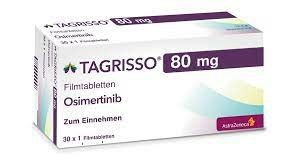
4. How to take osimertinib?
1. Dosage: Osimertinib is provided in the form of oral tablets. For patients with non-small cell lung cancer, the recommended dose is 80 mg once daily, with or without food, until the disease relapses or unacceptable toxicity occurs; in the setting of adjuvant treatment for NSCLC, the treatment duration is up to 3 years in total. If a dose of osimertinib is missed, do not take the missed dose and take the next dose as scheduled.
2. Medication management: For patients who are unable to swallow osimertinib tablets (dysphagia), the tablets can be dispersed in water or administered through a nasogastric tube.
(1)Disperse the tablets in60 mL (2 ounces) of non-carbonated water. Stir until the tablet is dispersed into small pieces (the tablet will not completely dissolve), then swallow immediately. Do not crush, heat or sonicate during preparation. Rinse container with 120mL to 240mL (4 to 8 ounces) of water and drink immediately.
(2)If administration via nasogastric tube is required, disperse the tablets in 15 mL of non-carbonated water as described above, then use an additional 15 mL of water to transfer any residue to a syringe. The 30 mL of fluid produced should be appropriately flushed (approximately 30 mL) according to the nasogastric catheter instructions. Repeat this step until the syringe is clear of debris, which will help ensure the full prescribed dose of osimertinib. Dispersions and residues should be administered within 30 minutes of adding the tablets to water.
5. How to store osimertinib?
Osimertinib is available as 40 mg and 80 mg tablets and is stored at 25°C (77°F), with an acceptable temperature range of 15-30°C (59-86°F).
6. How does osimertinib work?
Osimertinib is a kinase inhibitor of the epidermal growth factor receptor (EGFR) that irreversibly binds to certain mutant forms of EGFR (T790M, L858R and exon 19 deletion) at concentrations approximately 9-fold lower than wild type. Following oral administration of osimertinib, two pharmacologically active metabolites with similar inhibitory effects on osimertinib were found in plasma (AZ7550 and AZ5104, circulating at approximately 10% of the parent). AZ7550 showed similar potency to osimertinib, whereas AZ5104 showed greater potency against exon 19 deletion and T790M mutant (approximately 8-fold) as well as wild-type (approximately 15-fold) EGFR. In vitro, osimertinib also inhibits the activities of HER2, HER3, HER4, ACK1 and BLK at clinically relevant concentrations.
In cultured cells and animal tumor implantation models, osimertinib exhibited antitumor activity against NSCLC strains harboring EGFR mutations (T790M/L858R, L858R, T790M/exon 19 deletion and exon 19 deletion) and, to a lesser extent, wild-type EGFR amplification. Osimertinib is distributed in the brain of a variety of animals (monkeys, rats, and mice), and the brain-to-plasma AUC ratio after oral administration is approximately 2. These data are consistent with observations of increased tumor regression and survival in osimertinib-treated animals compared with control-treated animals in a preclinical mutant EGFR mouse intracranial metastasis xenograft model (PC9; exon 19 deletion).
[ 免责声明 ] 本页面内容来自公开渠道(如FDA官网、Drugs官网、原研药厂官网等),仅供持有医疗专业资质的人员用于医学药学研究参考,不构成任何治疗建议或药品推荐。所涉药品可能未在中国大陆获批上市,不适用于中国境内销售和使用。如需治疗,请咨询正规医疗机构。本站不提供药品销售或代购服务。


