
.jpeg)
What is the clinical efficacy of ritexitinib in the treatment of hereditary alopecia?
Hereditary alopecia, or androgenetic alopecia, is a chronic hair loss condition influenced by genetic factors. With the accelerated pace of modern life and increasing stress, the problem of hereditary hair loss has attracted increasing attention. Currently, there are a variety of drugs and methods for treating hair loss on the market, but the effects vary. In recent years, ritexitinib, as a new kinase inhibitor, has gradually attracted attention from the medical community for its potential role in the treatment of hereditary alopecia.
Ritexitinib is a kinase inhibitor, specifically capable of selectively inhibiting Januskinase3 (JAK3) and other tyrosine kinases. These kinases play important roles in cell signaling and are closely related to immune responses and inflammatory processes. Patients with hereditary alopecia often have an abnormal immune response around their hair follicles, causing damage and atrophy of the hair follicles. By inhibiting the activity of these kinases, ritexitinib is expected to modulate the immune response around hair follicles, thereby slowing the progression of hair loss.
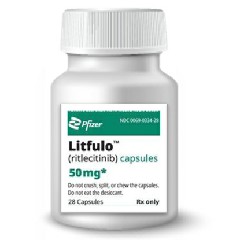
To evaluate the efficacy of ritexitinib in the treatment of hereditary alopecia, the medical community conducted a series of clinical trials. Among them, a pivotal Phase IIb/III clinical trial (called the ALLEGRO study) is particularly worthy of attention. The study included a large number of patients with alopecia areata aged 12 years and older, including many with hereditary alopecia. The results of the study showed that some patients achieved significant hair regrowth after continuous use of ritixitinib for 24 weeks.
Specifically, in theALLEGRO study, patients were randomly divided into different doses of rituxitinib group and placebo group. After 24 weeks of treatment, patients in the ritixitinib group had significantly greater scalp hair coverage compared with those in the placebo group. Especially for patients treated with 30mg and 50mgritixitinib daily, the proportion of patients with scalp hair coverage ≥80% at 24 weeks was significantly higher than that of the placebo group. This data provides strong evidence that ritexitinib has significant efficacy in promoting hair regeneration.
Additionally, other clinical trials have supported the effectiveness of ritixitinib in the treatment of hair loss. For example, a randomized, double-blind, multicenter clinical trial in patients with alopecia areata showed that patients treated with rituxitinib had significant improvements from baseline on SALT scores (a hair loss severity tool). These findings suggest that ritixitinib not only improves symptoms in patients with alopecia areata, but may also have a positive therapeutic effect in patients with hereditary alopecia.
While evaluating the efficacy of drugs, their safety and tolerability are also the focus of the medical community. Based on clinical trial data, ritixitinib demonstrated favorable safety and tolerability in both adult and adolescent patients. Although some patients have experienced some adverse reactions during use, such as headache, diarrhea, acne, etc., most of these reactions are mild and reversible. Serious adverse reactions are rare and usually related to individual differences and drug dose. Therefore, when using rituxitinib, doctors will adjust the dose according to the patient's specific situation to reduce the risk of adverse reactions.
[ 免责声明 ] 本页面内容来自公开渠道(如FDA官网、Drugs官网、原研药厂官网等),仅供持有医疗专业资质的人员用于医学药学研究参考,不构成任何治疗建议或药品推荐。所涉药品可能未在中国大陆获批上市,不适用于中国境内销售和使用。如需治疗,请咨询正规医疗机构。本站不提供药品销售或代购服务。


