
.jpeg)
What cancer does larotrectinib treat?
Larotrectinib is a new type of targeted anti-cancer drug, mainly used to treat malignant tumors with TRK gene fusion. TRKGene fusions (neurotrophic receptor tyrosine kinase) are rare but seen in a variety of cancers, including solid tumors in infants and young children, soft tissue sarcomas in adults, and other types of cancer.
TRKgene fusion leads to abnormal activation ofTRK receptors in tumor cells, thereby promoting tumor growth and spread. The mechanism of action of larotrectinib is by inhibiting the activation of TRK receptors, thereby blocking the growth signaling of tumor cells and inhibiting the development of tumors.
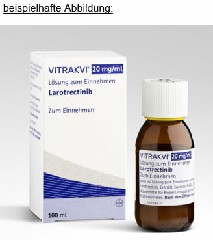
Larotinib has been shown to have significant efficacy againstTRK gene fusion tumors in clinical trials. In some studies, patients' tumors sometimes disappear completely or shrink significantly, extending patients' survival and improving their quality of life.
TRK gene fusions are relatively rare in clinical practice, but this targeted therapy provides a new treatment option for patients for whom traditional treatments are ineffective or for whom treatment options are limited. In addition, the efficacy of larotrectinib is not limited to specific types of cancer, but treatment options are determined based on the presence of TRK gene fusions in tumor cells, so it can span different types of cancer.
However, it should be noted that larotrectinib is not suitable for all cancer patients. This drug can only be considered if the patient's tumor is confirmed by genetic testing to have a TRK gene fusion. In addition, although larotrectinib has shown significant efficacy in some cases, it does not mean that it can completely cure cancer, because the risk of cancer recurrence and other factors still need to be considered.
In summary, larotrectinib, as a targeted anti-cancer drug, is mainly used to treat malignant tumors with TRK gene fusion, providing a new treatment option for some patients. Although its efficacy is encouraging, its use must be strictly determined by the patient's genotype and clinical profile, and further studies are needed to understand its long-term efficacy and safety.
[ 免责声明 ] 本页面内容来自公开渠道(如FDA官网、Drugs官网、原研药厂官网等),仅供持有医疗专业资质的人员用于医学药学研究参考,不构成任何治疗建议或药品推荐。所涉药品可能未在中国大陆获批上市,不适用于中国境内销售和使用。如需治疗,请咨询正规医疗机构。本站不提供药品销售或代购服务。


