
.jpeg)
What biological targets does Cabozantinib mainly act on?
Cabozantinib (Cabozantinib) is a tyrosine kinase inhibitor that works by helping to stop the uncontrolled growth that cancer cells exhibit. Cabozantinib promotes the growth of new blood vessels by blocking signals between cells and encourages cells to divide and grow. In doing so, it reduces the tumor's ability to spread (metastasize) to other parts of the body and invade surrounding areas.
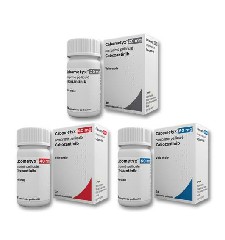
Tyrosine kinases are a family of enzymes involved in normal communication pathways between cells. They play a role in keeping the body functioning properly. However, in some cases, they do not function as they should, which can lead to the development of various diseases, including cancer. The main function of cabozantinib is to exert its efficacy by inhibiting multiple biological targets. Among them, cabozantinib specifically blocks or inhibits the tyrosine kinase activity of the following substances: MET, vascular endothelial growth factor (VEGFR) 1, 2, 3, AXL, RET, ROS1, TYRO3, MER, KIT, TRKB, FLT-3, TIE-2, etc. These targets play important roles in maintaining normal cell function as well as cancer development and spread.
Caboozantinib is used to treat patients with advanced renal cell carcinoma (kidney cancer), including as first-line treatment when combined with nivolumab. It is also used to treat patients with hepatocellular carcinoma (liver cancer) who have been previously treated with sorafenib, and in patients with certain differentiated thyroid cancers. It comes in tablet form and is taken once daily. Cabozantinib also comes in capsule form and is used to treat a type of medullary thyroid cancer that is getting worse and has spread to other parts of the body.
[ 免责声明 ] 本页面内容来自公开渠道(如FDA官网、Drugs官网、原研药厂官网等),仅供持有医疗专业资质的人员用于医学药学研究参考,不构成任何治疗建议或药品推荐。所涉药品可能未在中国大陆获批上市,不适用于中国境内销售和使用。如需治疗,请咨询正规医疗机构。本站不提供药品销售或代购服务。


