
.jpeg)
Briefly describe the function and efficacy of platinib capsules
Pralsetinib (Pralsetinib) is a selective rearrangement transfection (RET) inhibitor being developed to treat various solid tumors. RET is a well-described proto-oncogene present in various cancers including non-small cell lung cancer (NSCLC), thyroid cancer, and medullary thyroid carcinoma (MTC). Platinib is available in capsule form, and patients are advised to take 400 mg daily with a glass of water on an empty stomach. This drug is only available with a prescription.
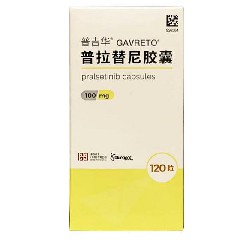
Platinib (formerly known as BLU-667) was developed by screening more than 10,000 design-agnostic kinase inhibitors and then undergoing extensive chemical modifications to improve their properties. Platinib has in vitro IC50 values u200bu200bin the range of 0.3-0.4 nmol/L for wild-type RET and several mutant forms, including CCDC6-RET, and is 100-fold more selective for RET kinases, exceeding 96% of the 371 tested kinases.
Platinib exerts antitumor effects by specifically inhibiting rearranged during transfection (RET) tyrosine kinases, including multiple distinct oncogenic RET fusions, mutant RET kinase domains containing gatekeeper mutations, and RET kinases with multiple activating single point mutations. Because platinib is more selective for RET than other kinases in vitro and in vivo, it is believed to have a better safety profile than previously used multikinase inhibitors.
RET has increased selectivity compared to other kinases, but platinib has been reported to inhibit DDR1, TRKC, FLT3, JAK1-2, TRKA, VEGFR2, PDGFRb, and FGFR1-2 at clinically relevant concentrations. The significance of these findings remains uncertain. Nonetheless, use of platinib may increase the risk of hypertension, bleeding events, poor wound healing, hepatotoxicity, interstitial lung disease/pneumonitis, and embryo-fetal toxicity.
[ 免责声明 ] 本页面内容来自公开渠道(如FDA官网、Drugs官网、原研药厂官网等),仅供持有医疗专业资质的人员用于医学药学研究参考,不构成任何治疗建议或药品推荐。所涉药品可能未在中国大陆获批上市,不适用于中国境内销售和使用。如需治疗,请咨询正规医疗机构。本站不提供药品销售或代购服务。


