
.jpeg)
What is the average duration of resistance to lorlatinib (lorlatinib)?
Lorlatinib (Lolatinib), as a targeted treatment for non-small cell lung cancer (NSCLC), has a long resistance time, but the resistance time will vary depending on factors such as individual differences, tumor characteristics, and treatment history. The following is a discussion of the mean resistance time tolorlatinib:
1.Average resistance time:
There is currently no clear unified data to determine the average resistance time to lorlatinib (lorlatinib) , because the resistance time is affected by many factors, such as the subtype of ALK or ROS1 mutation, treatment history before treatment, treatment response, etc.
However, some clinical studies have shown thatlorlatinib usually has a long resistance time, often reaching more than one year. Some studies have even shown that a significant proportion of patients treated with lorlatinib can maintain stable disease for longer periods of time, even years.
2.ALK or ROS1 mutated subtypes:
A patient's ALK or ROS1 mutation subtype may affect lorlatinib (lorlatinib) resistance time. Some studies suggest that different ALK or ROS1 mutation subtypes may have different effects on treatment response to and resistance to lorlatinib (lorlatinib).
Some ALK or ROS1 mutated subtypes may have a higher sensitivity to lorlatinib (lorlatinib), thereby prolonging resistance. Conversely, some subtypes may be less susceptible tolorlatinib (lorlatinib) resulting in a shorter duration of resistance.
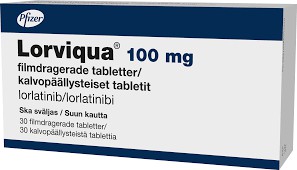
3.Treatment history before treatment:
A patient's prior treatment history may affect the duration of resistance to lorlatinib . Generally speaking, the more treatments a patient receives, the more likely it is that tumor cells will become resistant, shortening the duration of resistance to lorlatinib.
Some patients may have experienced treatments such as other targeted therapies or chemotherapy, which has caused tumor cells to develop drug resistance, thereby reducing the therapeutic effect of Lorlatinib (lorlatinib) and the duration of resistance.
4.Treatment response:
A patient's response to lorlatinib treatment also affects the time to resistance. In general, patients who respond well to lorlatinib (lorlatinib) usually have a longer duration of resistance. For those patients who do not respond well to treatment or whose disease progresses rapidly, the duration of resistance may be shorter.
To sum up,lorlatinib (lorlatinib) as a targeted treatmentNSCLC drug, usually has a long resistance time, which can reach more than one year. However, the resistance time is affected by many factors, including the subtype of ALK or ROS1 mutation, treatment history before treatment, treatment response, etc. Therefore, the resistance time may be different for individual patients, and doctors need to evaluate and provide guidance based on the patient's specific situation.
[ 免责声明 ] 本页面内容来自公开渠道(如FDA官网、Drugs官网、原研药厂官网等),仅供持有医疗专业资质的人员用于医学药学研究参考,不构成任何治疗建议或药品推荐。所涉药品可能未在中国大陆获批上市,不适用于中国境内销售和使用。如需治疗,请咨询正规医疗机构。本站不提供药品销售或代购服务。


