
.jpeg)
How effective is regorafenib in anti-cancer treatment?
Regorafenib, a multi-target targeted therapy drug, has attracted widespread attention in the anti-cancer field in recent years. Through a series of clinical trials, the positive effects of regorafenib (regorafenib) in the treatment of various cancers have been fully verified. Below is a detailed look at the performance of regorafenib (regorafenib) in different cancer types.
In the treatment of metastatic colorectal cancer (mCRC), regorafenib (regorafenib) has demonstrated significant efficacy. The CORRECT trial, as a global multi-center clinical study, has impressive results. The trial data showed that the median overall survival of mCRC patients treated with regorafenib (regorafenib) was significantly improved compared with the placebo group, specifically extending by approximately 1.4 months. This discovery undoubtedly provides new treatment hope for patients with metastatic colorectal cancer, and regorafenib (regorafenib) has therefore become one of the important drugs in the treatment of this disease.
In the field of liver cancer treatment, regorafenib also performs well. The RESORCE trial studied patients with advanced liver cancer (HCC) who had already received sorafenib treatment, comparing the effects of regorafenib (regorafenib) with placebo. The results are encouraging. The median overall survival of patients in the regorafenib treatment group reached 10.6 months, which was significantly higher than the 7.8 months in the placebo group. This result further confirms the effectiveness of regorafenib in the treatment of liver cancer.
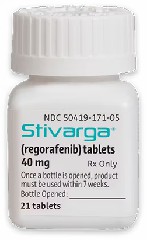
Regorafenib has also made positive progress in the treatment of gastrointestinal stromal tumors (GIST). GRIDResults from the GRID trial show that for patients with metastatic or unresectable GIST, treatment with regorafenib (regorafenib) can significantly delay the onset of cancer. The median progression-free survival (PFS) was prolonged to 4.8 months, while the placebo group was only 0.9 months. This discovery provides new treatment strategies for GIST patients.
The remarkable effect of regorafenib (regorafenib) in the treatment of various cancers is mainly due to its unique mechanism of action. As a multi-target drug, it can simultaneously act on multiple signaling pathways closely related to the occurrence and development of cancer, thereby more effectively inhibiting the growth, spread and angiogenesis of tumor cells. This comprehensive therapeutic effect makes regorafenib (regorafenib) have broad application prospects in the field of anti-cancer.
However, it is worth noting that although regorafenib (regorafenib) has shown significant anti-cancer effects in clinical trials, it is not suitable for all cancer patients. Individual patient differences, disease stage, and treatment options will all affect the efficacy of regorafenib. Therefore, in practical applications, doctors need to conduct a comprehensive assessment based on the patient's specific situation to ensure that regorafenib (regorafenib) can achieve the best therapeutic effect.
In general, regorafenib (regorafenib), as a multi-target targeted therapy drug, has demonstrated significant efficacy in anti-cancer treatment. By inhibiting multiple key signaling pathways in tumor cells, it successfully extends survival and improves the quality of life of patients with a variety of cancers. With the deepening of research and the expansion of clinical applications, regorafenib is expected to play a greater role in the anti-cancer field.
[ 免责声明 ] 本页面内容来自公开渠道(如FDA官网、Drugs官网、原研药厂官网等),仅供持有医疗专业资质的人员用于医学药学研究参考,不构成任何治疗建议或药品推荐。所涉药品可能未在中国大陆获批上市,不适用于中国境内销售和使用。如需治疗,请咨询正规医疗机构。本站不提供药品销售或代购服务。


