
.jpeg)
Enzalutamide/Enzalutamide Instructions
1. Common name: Enzalutamide,Enzalutamide
Product name:Xtandi, Ancotan
All names: enzalutamide, Enzalutamide, enzalutamide, enzalutamide soft capsules
2. Indications:
Enzalutamide/enzalutamide (Enzalutamide) is indicated for the treatment of the following patients:
1. Castration-resistant prostate cancer (CRPC);
2. Metastatic castration-sensitive prostate cancer (mCSPC);
3. Biochemically recurrent non-metastatic castration-sensitive prostate cancer (nmCSPC) with high risk of metastasis (high-risk BCR)
3. Usage and dosage:
1. Recommended dose: The recommended dose of enzalutamide is 160 mg orally once daily, which can be taken with or without food until disease progression or unacceptable toxicity occurs. Swallow capsules or tablets whole. Do not chew, dissolve or open capsules. Do not cut, crush, or chew tablets.
CRPC or mCSPC patients who receive enzalutamide treatment should also receive gonadotropin-releasing hormone (GnRH) analog therapy or undergo bilateral orchiectomy. Patients with nmCSPC who have high-risk BCR can be treated with enzalutamide with or without GnRH analogues.
For patients receiving enzalutamide, with or without GnRH analogues, treatment may be suspended if PSA becomes undetectable (<0.2ng/mL) after 36 weeks of treatment. Treatment is restarted when the PSA rises to ≥2.0ng/mL in patients who have previously undergone radical prostatectomy or when the PSA rises to ≥5.0ng/mL in patients who have received primary radiotherapy.
2. Dose adjustment: If the patient develops ≥Grade 3 or intolerable adverse reactions, discontinue enzalutamide for one week or until the symptoms improve to ≤Grade 2, then continue at the same or reduced dose (120 mg or 80 mg) as warranted.
3. Drug interactions:
(1) StrongCYP2C8 inhibitors: Avoid co-administration with strong CYP2C8 inhibitors. If this cannot be avoided, the dose of enzalutamide should be reduced to 80 mg once daily. If the concomitant use of a strong CYP2C8 inhibitor is discontinued, increase the dose to the dose prior to initiation of the strong CYP2C8 inhibitor.
(2) StrongCYP3A4 inducers: Avoid combined use with strong CYP3A4 inducers. If concurrent use cannot be avoided, the oral dose of enzalutamide may be increased from 160 mg to 240 mg once daily. If coadministration of a strong CYP3A4 inducer is discontinued, reduce the dose to the dose prior to initiation of the strong CYP3A4 inducer.
4. Adverse reactions:
In clinical studies of enzalutamide, the most common adverse reactions (≥10%) were musculoskeletal pain, fatigue, hot flashes, constipation, decreased appetite, diarrhea, hypertension, bleeding, falls, fractures, and headache. After enzalutamide was put on the market, allergies (edema of the face, tongue, lips, or pharynx), rashes, and severe skin adverse reactions (including Stevens-Johnson syndrome [SJS], erythema multiforme, and toxic epidermal necrosis pine) also occurred. (TEN), drug reaction with eosinophilia and systemic symptoms [DRESS] and acute generalized exanthematous pustulosis [AGEP]), posterior reversible encephalopathy syndrome (PRES), dysgeusia and other adverse events.
5. Supply and storage:
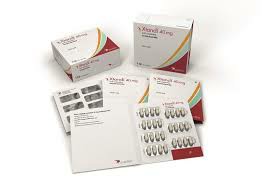
Enzalutamide Available is available as 40 mg capsules and 40 mg and 80 mg tablets. Store it in a dry place at 20°C to 25°C (68°F to 77°F) and keep the container tightly closed. Excursions allowed from 15°C to 30°C (59°F to 86°F).
6. Special groups:
1. Men: Based on animal studies, enzalutamide may impair fertility in males of reproductive potential. Therefore, it is recommended that male patients with female partners of reproductive potential use effective contraception during treatment and for 3 months after the last dose.
7. Mechanism of action:
Enzalutamide is an androgen receptor inhibitor that acts on different steps of the androgen receptor signaling pathway. Enzalutamide has been shown to competitively inhibit the binding of androgens to the androgen receptor; thereby inhibiting the nuclear translocation of the androgen receptor and its interaction withDNA. In vitro activity and correlation of the main metabolite N-desmethylenzalutamideIts similar. Enzalutamide reduces prostate cancer cell proliferation and induces cell death in vitro and reduces tumor volume in a mouse prostate cancer xenograft model.
[ 免责声明 ] 本页面内容来自公开渠道(如FDA官网、Drugs官网、原研药厂官网等),仅供持有医疗专业资质的人员用于医学药学研究参考,不构成任何治疗建议或药品推荐。所涉药品可能未在中国大陆获批上市,不适用于中国境内销售和使用。如需治疗,请咨询正规医疗机构。本站不提供药品销售或代购服务。


