
.jpeg)
Dabrafenib combined with trametinib in the treatment of children with BRAF V600E mutated low-grade glioma
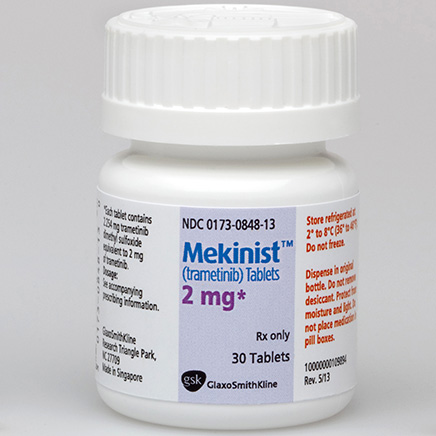
On March 16, 2023, the U.S. Food and Drug Administration approved dabrafenib (Tafinlar, Novartis) and trametinib (Mekinist, Novartis) for the treatment of pediatric patients 1 year and older with BRAF V600E-mutated low-grade glioma (LGG) who require systemic therapy. The U.S. FDA also approved new oral formulations of both drugs for patients who cannot swallow pills. This is the first time that the US FDA has approved a systemic therapy for the first-line treatment of children with BRAF V600E mutated LGG.
Efficacy was evaluated in Studycdrb 436g 2201 (NCT 02684058), a multicenter, open-label trial in patients with LGG (WHO classes 1 and 2) requiring first systemic therapy. Patients were randomized in a 2:1 ratio to receive dabrafenib plus trametinib (D+T) or carboplatin plus vincristine (C+V). BRAF mutation status is prospectively identified through local or central laboratory testing. Available tumor samples were also retrospectively tested at the central laboratory to assess mutational status. Patients received D+T doses based on age and weight until they no longer benefited or developed unacceptable toxicity. C+V was administered at doses of 175 mg/m² and 1.5 mg/m² (0.05 mg/kg in patients weighing >12 kg) based on body surface area as a 10-week induction course followed by eight 6-week maintenance cycles.
The primary efficacy outcome measure is overall response rate (ORR) based on independent review according toRANO·LGG (2017) criteria. Other efficacy outcome measures were progression-free survival (PFS) and overall survival (OS). The primary analysis was performed when all patients completed at least 32 weeks of treatment.
In theLGG cohort, 110 patients were randomly assigned to the D+T group (n=73) or the C+V group (n=37). The ORR in the D+T group was 46.6% (95% CI: 34.8, 58.6), while the ORR in the C+V group was 10.8% (95% CI: 3.0, 25.4) (p = < 0.001). The DOR in the D+T group was 23.7 months (95% CI: 14.5, not estimable), and the DOR in the C+V group was not estimable (95% CI: 6.6, not estimable). PFS was 20.1 months (95% CI: 12.8, not estimable) and 7.4 months (95% CI: 3.6, 11.8) (HR=0.31 [95% CI: 0.17, 0.55]; p=<0.001) in the D+T and C+V arms, respectively. At the time of the interim analysis of OS, all patients had completed at least 32 weeks of treatment or had discontinued treatment early, and there was one death in the C+V group. The OS results at the interim analysis were not statistically significant.
AcceptingAmong the pooled safety profiles of pediatric patients treated with D+T (N=166), the most common (> Adverse reactions reported by 20% were fever (66%), rash (54%), headache (40%), vomiting (38%), musculoskeletal pain (36%), fatigue (31%), dry skin (31%), diarrhea (30%), nausea (26%), epistaxis and other bleeding events (25%), abdominal pain (24%), and dermatitis acneiformis (23%). The most common (>2%) grade 3 or 4 laboratory abnormalities were decreased neutrophil count (20%), increased alanine aminotransferase (3.1%), and increased aspartate aminotransferase (3.1%).
Recommended dosing of dabrafenib and trametinib in pediatric patients is based on body weight; dabrafenib is taken orally twice daily and trametinib is taken orally once daily. Dabrafenib and trametinib were administered until disease progression or unacceptable toxicity.
[ 免责声明 ] 本页面内容来自公开渠道(如FDA官网、Drugs官网、原研药厂官网等),仅供持有医疗专业资质的人员用于医学药学研究参考,不构成任何治疗建议或药品推荐。所涉药品可能未在中国大陆获批上市,不适用于中国境内销售和使用。如需治疗,请咨询正规医疗机构。本站不提供药品销售或代购服务。


