
.jpeg)
Research on the efficacy of Seleniso (Silvio) in the field of anti-cancer
Selinexor (Selinexor), this targeted drug, has attracted much attention in the anti-cancer field in recent years. Its unique anti-cancer mechanism makes it show great potential in the treatment of various malignant tumors. This article will start from the therapeutic effect of Selinesol (Sivio)on multiple myeloma (MM) and large B cell lymphoma (rrDLBCL), and deeply explore its anti-cancer efficacy.
Multiple myeloma is a disease caused by the abnormal proliferation of malignant plasma cells in the bone marrow. For this condition, treatment regimens of selinexol (Sivio) combined with other drugs such as bortezomib and dexamethasone (XVd regimen) or only combined with dexamethasone (Xd regimen) have shown significant efficacy in clinical trials. Data show that compared with traditional chemotherapy, these combination treatment options can significantly extend patients' progression-free survival (PFS) and overall survival (OS), and significantly improve patients' response rates. What is even more exciting is that when Selinisol (Sivio) is used in combination with drugs such as anti-CD38 monoclonal antibodies, the therapeutic effect is more significant. In some clinical trials, the patient's effective rate even exceeded 40%.
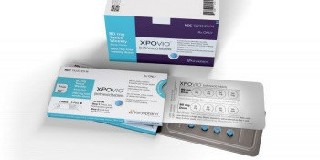
LargeBcell lymphoma is a common type of lymphoma. Treatment of relapsed or refractory cases is particularly difficult. However, Seleniso (Silvio) has also shown considerable anticancer activity in such cases. According to clinical trial data, the effectiveness of Selinisol (Silvio) alone in treating patients with rrDLBCL is approximately 20-30%. And when Selinisol (Silvio) is used in combination with dexamethasone and other drugs, its therapeutic effect is further improved.
So, how does Seleniso (Silvio) exert its anti-cancer effect? Its core mechanism is to inhibit the transport of nuclear proteins, thereby inducing the apoptosis of cancer cells. Nuclear proteins play a vital role in the life activities of cells, regulating gene expression and cell proliferation. Selinesol (Silvio) can block the transport process of these proteins, thereby blocking the key survival signaling pathways in cancer cells, ultimately leading to the apoptosis of cancer cells.
Although Seleniso (Silvio) has shown good efficacy in anti-cancer, we also need to face its limitations. Some patients may develop drug resistance after taking Selinisol (Silvio), resulting in reduced or even ineffective treatment. At the same time, adverse reactions caused by drugs, such as nausea, vomiting and anemia, may also affect the patient's quality of life.
In summary, Selinisol (Silvio) as a new type of targeted drug, has shown significant anti-cancer activity in the treatment of malignant tumors such as multiple myeloma and large B-cell lymphoma. However, how to further improve its therapeutic effect, reduce adverse reactions and deal with the problem of drug resistance is still a direction that we need to focus on and explore in future research and clinical practice.
[ 免责声明 ] 本页面内容来自公开渠道(如FDA官网、Drugs官网、原研药厂官网等),仅供持有医疗专业资质的人员用于医学药学研究参考,不构成任何治疗建议或药品推荐。所涉药品可能未在中国大陆获批上市,不适用于中国境内销售和使用。如需治疗,请咨询正规医疗机构。本站不提供药品销售或代购服务。


