
.jpeg)
Enzalutamide/enzalutamide improves undetectable PSA levels in patients with non-metastatic CSPC
Enzalutamide/enzalutamide (Enzalutamide) combined with leuprolide compared with leuprolide aloneleuprolide, according to a post hoc analysis of the phase 3 EMBARK trial (NCT02319837) More patients with nonmetastatic castration-sensitive prostate cancer (nmCSPC) who are at high risk for biochemical recurrence have undetectable prostate-specific antigen (PSA) levels on Leuprolide and leuprolide alone.
At the data cutoff of January 31, 2023, 89% and 82% of patients in the combination therapy group (n=355) and enzalutamide monotherapy group (n=355) achieved undetectable PSA (<0.2ng/mL) at week 25 or less, compared with 63% of patients receiving leuprolide monotherapy (n=358). In addition, 96%, 90%, and 73% of patients in the combination therapy group (n = 241), enzalutamide monotherapy group (n = 270), and leuprolide monotherapy group (n = 203) restarted treatment after 37 weeks with undetectable PSA, respectively.
In addition, the researchers emphasized that undetectablePSA was associated with higher metastasis-free survival (MFS) regardless of which treatment the patient received. In the combination therapy group (n=231), enzalutamide monotherapy group (n=242), and leuprolide monotherapy group (n=149), patients who restarted treatment and achieved undetectable PSA levels were Median MFS by blinded independent central review (BICR) were not reached (NR; 95% CI, NR-NR), NR (95% CI, NR-NR), and NR (95% CI, 80.1%-NR). By comparison, median MFS for patients who resumed treatment without undetectable PSA levels in the combination therapy group (n = 10), enzalutamide monotherapy (n = 28), and leuprolide monotherapy (n = 54) were 50.5 months (95% CI, 29.1-NR), 42.4 months (95% CI, 27.5-NR), and 55.3 months (95% CI, 27.5-NR), respectively. CI, 44.2-NR).
A key feature of EMBARK is that patients are treated for 36 weeks, with treatment suspended at week 37 if PSA levels are undetectable at week 36 and treatment restarted if PSA levels rise to protocol-specified thresholds. Post hoc analysis of PSA dynamics in the EMBARK trial was designed to understand the time course of PSA undetectability and the likelihood of undetectable PSA levels after restarting treatment.
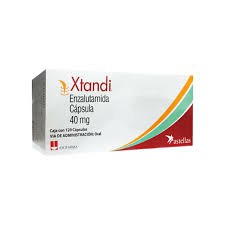
Enzalutamide monotherapyIt was approved by the FDA in November 2023 for the treatment of patients with non-metastatic CSPC and high-risk BCR. EMBARK's findings support regulatory decisions.
EMBARK included patients with nonmetastatic CSPC who had a PSA doubling time of 9 months or less, no metastases on bone scan or CT/MRI, a testosterone level of 150 ng/dL or higher, had not received hormone therapy for at least 9 months before randomization, had a screening PSA level of at least 1 ng/mL after radical prostatectomy, and had a minimum level of at least greater than 2 ng/mL in patients who received external radiation therapy. Patients were stratified according to screening PSA level (≤10 ng/mL vs >10 ng/mL), PSA doubling time (≤3 months vs >3 months vs ≤9 months), and prior hormone therapy (yes vs no).
Patients were randomly assigned in a 1:1:1 ratio to receive daily oral enzalutamide 160 tablets plus intramuscular injection of leuprolide 22.5 mg every 12 weeks, enzalutamide monotherapy (same dosing schedule) or leuprolide monotherapy (same dosing schedule). At week 36, patients in all groups with a PSA below 0.2 ng/mL had treatment withheld at week 37, monitored, and restarted treatment if their PSA rose. Those patients who did not reach the PSA threshold continued treatment.
The primary endpoint is the BICR disease-free survival rate of enzalutamide combined with leuprolide monotherapy Key secondary endpoints include MFS, time to PSA progression, time to first new antineoplastic therapy, overall survival and safety for enzalutamide monotherapy versus leuprolide treatment. At baseline, the median PSA doubling times were 4.6 months, 5.0 months, and 5.0 months, respectively. For primary definitive treatment, 50% of patients in the combination therapy group and the leuprolide monotherapy group received radical prostatectomy and radiation therapy, and 47% of patients in the enzalutamide monotherapy group received radiation therapy.
Additional findings from the post hoc analysis showed that 3% of patients in the combination treatment group achieved an undetectable PSA at week 36, and 6% achieved this level after week 37. These rates were 4% and 6%, respectively, in the enzalutamide monotherapy group and 6% and 10%, respectively, in the leuprolide monotherapy group.
Concerning MFS in patients who restarted treatment and achieved undetectable PSA, the hazard ratio for combination therapy versus leuprolide monotherapy was 0.52 (95% CI , 0.27-1.02; P=0.052), leuprolide monotherapy and enzalutamide monotherapy was 1.21 (95%CI: 0.68-2.15; P0=.512). Among patients who did not achieve undetectable PSA levels after restarting, the hazard ratios for the combination versus leuprolide monotherapy and enzalutamide monotherapy versus leuprolide monotherapy were 1.00 (95% CI, 0.34-2.93; P=0.995) and 1.31 (95% CI, 0.66-2.62; P=0.436), respectively.
Because it cannot be detected for a long timePSA levels, after a median of 4 years and 11 months, more patients in the enzalutamide-combination arm compared with leuprolide alone had discontinued treatment. Independent of treatment type, undetectable PSA levels after restarting treatment were associated with improvement in MFS.
[ 免责声明 ] 本页面内容来自公开渠道(如FDA官网、Drugs官网、原研药厂官网等),仅供持有医疗专业资质的人员用于医学药学研究参考,不构成任何治疗建议或药品推荐。所涉药品可能未在中国大陆获批上市,不适用于中国境内销售和使用。如需治疗,请咨询正规医疗机构。本站不提供药品销售或代购服务。


