
.jpeg)
How effective is cabozantinib in the treatment of lung cancer?
Cabozantinib, as a multi-target tyrosine kinase inhibitor, has demonstrated significant clinical efficacy in the treatment of lung cancer.
RETGene fusion is a common driver gene mutation in non-small cell lung cancer (NSCLC). Cabozantinib has shown impressive therapeutic effects in patients with RET fusion lung cancer. According to data from a II phase clinical trial, cabozantinib was used to treat lung cancer patients with RET fusion, with an effective rate of ( span>ORR) is as high as 38%, which means that nearly 40% of patients have effective tumor control after receiving cabozantinib treatment. At the same time, the progression-free survival (PFS) of these patients was also significantly prolonged, reaching 7 months. This data fully proves the excellent performance of cabozantinib in the treatment of RET fusion lung cancer.
In addition to RET fusion lung cancer, cabozantinib has also achieved certain efficacy in the treatment of other genotypes of lung cancer. For example, cabozantinib has also shown its therapeutic effect in lung cancer with genotypes such as EGFR mutation and KRAS mutation. According to data from a phase I clinical trial conducted in Japan, the overall response rate (ORR) reached 20% among patients with advanced non-small cell lung cancer (NSCLC). This means that one in five patients treated with cabozantinib achieved a partial response to their tumors. At the same time, the disease control rate is as high as 80%, demonstrating the excellent ability of cabozantinib in controlling lung cancer.
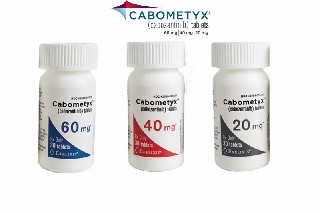
For MET mutated lung cancer, especially patients who are resistant to crizotinib, cabozantinib also shows significant therapeutic effects. Crizotinib is a commonly used drug for MET mutated lung cancer, but drug resistance may develop after long-term use. Cabozantinib can cover MET target, effectively inhibiting secondary mutations caused by crizotinib resistance, such as MET D1228 and Y1230 mutations, etc. This discovery provides a new treatment option for crizotinib-resistant patients.
Taken together, cabozantinib has shown good clinical efficacy in the treatment of lung cancer. Its multi-target characteristics enable it to treat lung cancer patients with different genotypes and achieve significant results. Especially in the treatment of lung cancer with RET fusion and MET mutation, cabozantinib has shown its unique advantages.
Any drug will inevitably be accompanied by certain adverse reactions. Cabozantinib may also cause some discomfort during use, such as diarrhea, loss of appetite, fatigue, nausea, etc. Most of these adverse effects are reversible and can be alleviated with appropriate dose adjustment and supportive care. Therefore, when using cabozantinib, doctors will adjust the dosage according to the patient's specific conditions to ensure the safety and effectiveness of the treatment.
It is worth noting that although cabozantinib has achieved significant efficacy in the treatment of lung cancer, it has not yet been approved for marketing in China. Therefore, patients should be cautious and follow their doctor's instructions when using it. At the same time, we also look forward to more clinical data in the future to further confirm the efficacy and safety of cabozantinib in the treatment of lung cancer.
Cabozantinib, as a multi-target tyrosine kinase inhibitor, has demonstrated significant clinical efficacy in the treatment of lung cancer. It has good therapeutic effects on lung cancer patients with different genotypes, especially in lung cancer with RET fusion and MET mutations.
[ 免责声明 ] 本页面内容来自公开渠道(如FDA官网、Drugs官网、原研药厂官网等),仅供持有医疗专业资质的人员用于医学药学研究参考,不构成任何治疗建议或药品推荐。所涉药品可能未在中国大陆获批上市,不适用于中国境内销售和使用。如需治疗,请咨询正规医疗机构。本站不提供药品销售或代购服务。


