
.jpeg)
What is the difference between entrectinib and larotinib?
Two new targeted agents have been approved for pediatric and adult patients with advanced or metastatic solid tumors that harbor neurotrophic receptor tyrosine kinase (NTRK) gene fusions but without acquired resistance mutations. Larotrectinib and entrectinib are the second and third drugs, respectively, to be approved as tissue-agnostic treatments. NTRK gene fusions are now targeted biomarkers for patients who may lack satisfactory alternative treatment options.
From a target perspective, entrectinib and larotrectinib are first-generation pan-tropomyosin-related kinase (TRK) inhibitors with activity against TRKA, TRKB and TRKC. Inhibition of the TRK receptor domain exerts anti-tumor effects by reducing cell proliferation and survival in NTRK fusion-positive cancers. Entrectinib has both the antigenic oncogene tyrosine protein kinase ROS 1 (ROS 1) and anaplastic lymphoma kinase (ALK), which means that entrectinib has a wider range of applications and can treat cancers involving NTRK and ROS1 gene fusions, while larotrectinib mainly targets cancers with NTRK gene fusions.
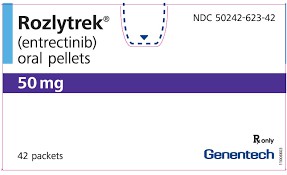
In terms of indications, entrectinib and larotrectinib are approved for patients with solid tumors that have NTRK gene fusions but no known resistance mutations, patients with metastases or patients whose resection would result in significant morbidity, and patients with no satisfactory alternative treatments or whose disease has progressed after treatment. These highly selective, tumor-agnostic drugs are approved for use in both adult and pediatric patients. Entrectinib also has an indication for use in adults with metastatic ROS1-positive non-small cell lung cancer. Approvals are based on tumor response rate and duration of response.
In terms of efficacy, larotinib’s objective response rate (ORR) reached 80% in clinical trials, while entrectinib’s ORR was 57%. However, this does not mean that the efficacy of larotinib is necessarily better than that of entrectinib, because the types and numbers of cancers studied in the two are not completely consistent, and the drug itself may also be one of the factors affecting the efficacy. In addition, entrectinib has shown good penetration into the brain in clinical trials and has a good therapeutic effect on refractory central nervous system tumors.
In terms of medication method, larotrectinib is an oral liquid, which avoids the problem of dysphagia. The adjustment of the taste makes it easier for children to accept and improves compliance. Entrectinib is in capsule form and needs to be taken orally.
In short, although entrectinib and larotinib are anti-cancer drugs targeting specific gene mutations, there are certain differences in targets, indications, efficacy and usage. The specific choice of drug needs to be decided based on the patient's specific situation and the doctor's advice.
[ 免责声明 ] 本页面内容来自公开渠道(如FDA官网、Drugs官网、原研药厂官网等),仅供持有医疗专业资质的人员用于医学药学研究参考,不构成任何治疗建议或药品推荐。所涉药品可能未在中国大陆获批上市,不适用于中国境内销售和使用。如需治疗,请咨询正规医疗机构。本站不提供药品销售或代购服务。


