
.jpeg)
How effective is crizotinib against met mutations?
Crizotinib (Crizotinib) is an oral small molecule tyrosine kinase inhibitor that inhibits a variety of receptor tyrosine kinases, including ALK (anaplastic lymphoma kinase), MET (c-Mesenchymal-Epithelial Transitionreceptor) and ROS1 (c-rosproto-oncogene1tyrosine kinase), etc. In recent years, with the development of precision medicine, crizotinib has shown significant efficacy in the treatment of non-small cell lung cancer (NSCLC) targeting specific gene mutations. This article will focus on the clinical efficacy of crizotinib in patients with MET mutated lung cancer.
The MET gene is a gene encoding hepatocyte growth factor receptor (HGFR). Its mutation or amplification can lead to the proliferation, invasion and metastasis of tumor cells. In NSCLC, MET gene mutations mainly include MET gene amplification and MET 14 exon skipping mutations. These mutations will promote the development of tumors and have a negative impact on the prognosis of patients.
Crizotinib, as a multi-target tyrosine kinase inhibitor, can competitively bind to the ATP binding site of the MET receptor, thereby blocking the MET signaling pathway and inhibiting the growth and proliferation of tumor cells. In addition, crizotinib can also inhibit the angiogenesis and migration ability of tumor cells, further exerting its anti-tumor effect.
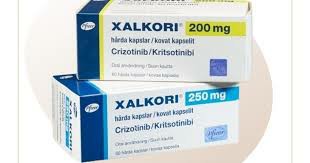
In clinical trials for MET mutated NSCLC patients, crizotinib demonstrated higher ORR. Especially in the PROFILE 1001 study, forMET 14For NSCLC patients with exon skipping mutations, the ORR reached 32% after treatment with crizotinib. This means that more than one-third of patients who received crizotinib had their tumors significantly shrunk or controlled. In addition, the study also observed certain complete response (CR) and partial response (PR) rates, further proving the efficacy of crizotinib in MET mutated lung cancer.
Crizotinib not only shrinks tumors, but also significantly extends patients’ survival. inPROFILE In the 1001Study, the median progression-free survival (PFS) of patients treated with crizotinib was 7.3< /span> months, and the median overall survival (OS) reached 20.5 months. These data fully demonstrate the effectiveness of crizotinib in prolonging the survival of patients with MET mutated lung cancer.
Some adverse reactions may occur during treatment with crizotinib, such as edema, visual impairment, nausea, vomiting, diarrhea, etc. However, most of these adverse reactions are mild to moderate and can usually be alleviated by dose adjustment or symptomatic treatment. Overall, crizotinib was well tolerated, and most patients were able to adhere to and complete the treatment course.
For different types ofMET mutations, there may be certain differences in the efficacy of crizotinib. For example, in patients with MET gene amplification, the efficacy of crizotinib may vary depending on the degree of amplification. Some studies have shown that the efficacy of crizotinib may be more significant in patients with high amplification.
Crizotinib has also shown potential efficacy for new MET mutation types such as rare PRKAR1A::MET fusion. In one case report, a 67-year-old female patient with lung cancer caused by a PRKAR1A::MET fusion mutation achieved near-complete response after treatment with crizotinib. This further demonstrates the potential of crizotinib in the treatment of novelMET mutations.
[ 免责声明 ] 本页面内容来自公开渠道(如FDA官网、Drugs官网、原研药厂官网等),仅供持有医疗专业资质的人员用于医学药学研究参考,不构成任何治疗建议或药品推荐。所涉药品可能未在中国大陆获批上市,不适用于中国境内销售和使用。如需治疗,请咨询正规医疗机构。本站不提供药品销售或代购服务。


