
.jpeg)
In EGFR+ NSCLC, ORR of subcutaneous evantumumab is noninferior to intravenous administration
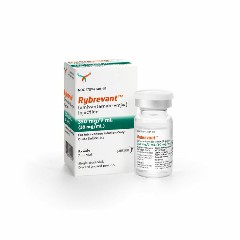
According to the results of the phase 3 PALOMA-3 trial (NCT05388669) published in 2024, in patients with refractory advanced non-small cell lung cancer (NSCLC) carrying EGFR mutations, subcutaneous injection of evantumumab (Amivantamab) has a lower objective response rate (ORR) compared with intravenous (IV) administration.
The ORR was 30% (95% CI, 24%-37%) in patients who received subcutaneous evantumumab (n=206) compared with those who received intravenous evantumumab (n=206). n=212; relative risk, 0.92; 95%CI, 0.70-1.23; P=0.001), the ORR was 33% (95%CI; 26%-39%), meeting the non-inferiority standard. For patients with confirmed responses, the ORR was 27% (95% CI: 21%-33%) in the subcutaneous group and 27% (95% CI: 21%-33%) in the intravenous group (relative risk, 0.99; 95% CI: 0.72-1.36; P<0.001).
In addition, data from the trial also showed improvements in other endpoints such as duration of response (DOR), progression-free (PFS) and overall survival (OS). Numerically longer response periods andPFS were seen compared with the intravenous arm, as well as a significant improvement in overall survival. Further studies are needed to elucidate the mechanism of this effect.
After a median follow-up of 7.0 months, the trial met the co-primary endpoints of area under the curve and trough concentration in cycle 2 (day 1 to day 15) (day 1 of cycle 2 or day 1 of cycle 4). When comparing subcutaneous evantumumab plus lazertinib With intravenous evantumumab , the geometric mean ratio of trough concentrations was 1.15 (90% CI, 1.04-1.26) on Cycle 2 Day 1 and on Cycle 2 Day 1 and day 15 was 1.03 (90% CI, 0.98-1.09). The geometric mean ratio of trough concentrations at steady state (cycle 4, day 1) was 1.43 (90% CI, 1.27-1.61).
Among patients with confirmed responses, those who received subcutaneous evantumumab plus lazertinib had a longer median DOR than those who received intravenous evantumumab (11.2 months [95% CI, 6.1-not evaluable (NE) vs. 8.3 months [95% CI, 5.4-NE]). There was also a favorable PFS trend in the subcutaneous injection group (median 6.1 months; 95% CI 4.3-8.1) compared with the intravenous injection group (median 4.3 months; 95% CI, 4.1-5.7; HR 0.84; 95% CI, 0.64-1.10; P=0.20), but it was not statistically significant.
Patients who received subcutaneous evantumumab plus lazertinib had significantly longer OS than those who received intravenous evantumumab (HR, 0.62; 95% CI, 0.42-0.92; nominal P=0.02). More patients were alive at 12 months in the subcutaneous group compared with the intravenous group (65% vs. 51%, respectively).
Infusion-related reactions were approximately 5-fold lower in patients who received subcutaneous evantumumab compared with patients who received intravenous evantumumab (13% vs. 66%, respectively). There were no grade 4 or 5 infusion-related reactions, most of which occurred in cycle 1. In contrast to 2 events in the intravenous group, no infusion-related reactions resulting in hospitalization were observed in the subcutaneous group. Additionally, there were no discontinuations related to infusion reactions in the subcutaneous group compared with 4 events in the intravenous group. Most patients who received subcutaneous or intravenous evantumumab received prophylactic anticoagulation (80% and 81%, respectively).
PALOMA-3 is the first prospective study to examine the impact of prophylactic anticoagulation on the risk of VTE [venous thromboembolism] in patients receiving evantumumab and lazertinib. Among all patients in the trial, 9% of patients in the subcutaneous group developed VTE, compared with 14% of patients in the intravenous group. VTE occurred in 10% of patients who received prophylactic anticoagulation, compared with 21% of patients who did not receive prophylactic anticoagulation. Of note, among patients receiving prophylactic anticoagulation, the incidence of grade 3 or higher bleeding events was uncommon in the subcutaneous and intravenous groups (2% and 1%, respectively).
Prophylaxis in patients receiving evantumumab plus lazertinib does affect the incidence of VTE and should become routine treatment. The therapeutic administration time of subcutaneous infusion of evantumumab was reduced to less than5 u200bu200bminutes compared to 5 hours for the first intravenous infusion of evantumumab (and then 2 hours). At the end of treatment, more patients reported that subcutaneous evantumumab was more convenient or very convenient than intravenous evantumumab (85% vs. 35%, respectively).
Researchers analyzed the efficacy, pharmacokinetics and safety of subcutaneous evantumumab in patients with EGFR-mutated advanced non-small cell lung cancer whose disease had progressed during or after osimertinib and platinum-based chemotherapy.
Evantumumab, a bispecific EGFR and MET-targeting antibody with immune cell-directed activity, is approved for use as an intravenous formulation. Intravenous evantumumab was first administered more than4 hours, the initial dose needs to be administered in divided doses over 2 days. And it also had an infusion-related reaction rate, or IRR rate, of 67%. A subcutaneous evantumumab regimen was developed with the goal of reducing patient dosing time.
In this study, 418 patients were randomized to receive subcutaneous injection (n=206; median age, 61 years; 67% female) or intravenous injection (n=212; median age, 62 years; 67% male). Patients in both groups received lazertinib. Among randomized patients, 416 received at least 1 dose of assigned treatment. During the first 4 months of treatment, patients are advised to undergo prophylactic anticoagulation therapy. Regarding baseline demographics, patients in the subcutaneous and intravenous groups had received a median of 2 prior therapies, and 35% of patients in both groups had a history of brain metastases.
The dose of subcutaneous evantumumab is 1600 mg (2240 mg for patients 80 kg or more) by manual injection every week for the first 4 weeks and every 2 weeks thereafter. By comparison, the intravenous dose of evantumumab is 1050 mg (1400 mg for doses 80 kg or greater). Patients in both groups took 240mgglazertinib orally daily.
The primary pharmacokinetic non-inferiority endpoints of this trial were area under the curve and trough concentration at cycle 2. In addition, key secondary endpoints include PFS, ORR, DOR, patient satisfaction and safety. Researchers also included a predefined exploratory OS endpoint.
[ 免责声明 ] 本页面内容来自公开渠道(如FDA官网、Drugs官网、原研药厂官网等),仅供持有医疗专业资质的人员用于医学药学研究参考,不构成任何治疗建议或药品推荐。所涉药品可能未在中国大陆获批上市,不适用于中国境内销售和使用。如需治疗,请咨询正规医疗机构。本站不提供药品销售或代购服务。


