
.jpeg)
The difference between crizotinib and entrectinib
Although both crizotinib and entrectinib are targeted drugs targeting specific gene mutations, their mechanisms of action and targets are different. Crizotinib is mainly used to treat locally advanced or metastatic non-small cell lung cancer (NSCLC) that is positive for anaplastic lymphoma kinase (ALK) as determined by a CFDA-approved test method. It inhibits the activity of ALK kinase and blocks the signal transduction of tumor cell growth and spread, thereby achieving the purpose of treating tumors.
Entrectinib is a new type of oral anti-tumor drug that is a targeted therapy drug. It not only inhibits TRK family protein kinases, but also has an inhibitory effect on ROS1. This allows entrectinib to show unique efficacy in the treatment of NTRK fusion gene-positive solid tumors and ROS1-positive non-small cell lung cancer. More importantly, entrectinib can effectively penetrate the blood-brain barrier and also has a good therapeutic effect on tumor patients with brain metastases.
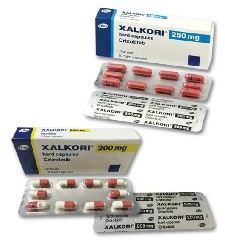
Crizotinib has shown efficacy in clinical trials for patients with ALK-positive non-small cell lung cancer, with a median progression-free survival of 5-20 months, the overall survival can reach 32.5-51.4 months, and the objective response rate is 54%~80%. These data indicate that crizotinib has certain efficacy in this group of patients.
In contrast, entrectinib’s performance in clinical trials was also impressive. In clinical trials for ROS1 positive non-small cell lung cancer patients, the objective response rate (ORR) of entrectinib reached 68.7%, and the median progression-free survival (< /span>PFS) is 17.7 months, and the median overall survival (OS) is as high as 47.7 months. These data suggest that entrectinib has significant efficacy in the treatment ofROS1positive non-small cell lung cancer.
Crizotinib has relatively narrow indications and is mainly used forALKTreatment of locally advanced or metastatic non-small cell lung cancer. The indications of entrectinib are broader. In addition to being used to treat ROS1-positive non-small cell lung cancer, it can also be used to treat NTRK fusion gene-positive solid tumors. This allows entrectinib greater flexibility in indications.
[ 免责声明 ] 本页面内容来自公开渠道(如FDA官网、Drugs官网、原研药厂官网等),仅供持有医疗专业资质的人员用于医学药学研究参考,不构成任何治疗建议或药品推荐。所涉药品可能未在中国大陆获批上市,不适用于中国境内销售和使用。如需治疗,请咨询正规医疗机构。本站不提供药品销售或代购服务。


