
.jpeg)
What is the efficacy of taking Tarceva and crizotinib together?
The combination of Tarceva and crizotinib has certain clinical efficacy in the treatment of lung cancer, but the specific effect is affected by many factors.
Tarceva (Erlotinib) is an epidermal growth factor receptor (EGFR) tyrosine kinase inhibitor that inhibits the growth and division of tumor cells by inhibiting EGFR signaling. It is mainly used to treat EGFR mutated non-small cell lung cancer (NSCLC).
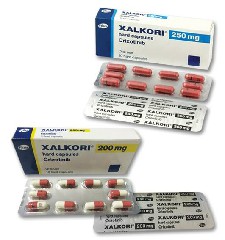
Crizotinib (Crizotinib) is a multi-target tyrosine kinase inhibitor, mainly targeting ALK (anaplastic lymphoma kinase)-positive NSCLC. It blocks the signal transduction of tumor cells by inhibiting the activity of kinases such as ALK and MET.
The combination of Tarceva and crizotinib is based on a multi-target treatment strategy. In lung cancer, EGFR and ALK are common driver gene mutations, and some patients may have abnormalities of EGFR and ALK at the same time. In addition, MET gene amplification is also an important mechanism leading to resistance to EGFR targeted drugs. Therefore, the combined use of Tarceva and crizotinib may simultaneously inhibit the signaling of EGFR and ALK/MET, thereby improving the therapeutic effect.
In some case reports, the combination of Tarceva and crizotinib resulted in significant tumor regression. This may be related to the fact that the two drugs act on different targets at the same time and produce synergistic anti-tumor effects. However, the efficacy of this combination of drugs may not be observed in all patients, and some patients may have poor results due to complex conditions or drug resistance.
The combination of Tarceva and crizotinib may prolong progression-free survival (PFS). In some studies, patients who received the combination had longer progression-free survival than Tarceva or crizotinib alone. This suggests that the combination of the two drugs may be more effective in controlling tumor progression.
Although combination therapy may prolong progression-free survival, the impact on overall survival (OS) is unclear. Some studies have shown that combined medication may have a positive impact on OS, but more research is needed to confirm this conclusion.
Taking Tarceva and crizotinib together may increase the risk of side effects. Common side effects include diarrhea, rash, fatigue, nausea, etc. In addition, both drugs may cause serious side effects such as liver function abnormalities and interstitial pneumonitis. Therefore, when using combination drug regimens, the patient's response should be closely monitored and drug doses should be adjusted or discontinued in a timely manner as necessary.
The combination of Tarceva and crizotinib has shown certain clinical efficacy in the treatment of lung cancer, especially in patients with EGFR and ALK/MET abnormalities. However, this regimen is not suitable for all patients and may increase the risk of side effects. Therefore, the patient's specific situation and doctor's recommendations should be fully considered before use. In the future, with the development of precision medicine, we look forward to the emergence of more personalized treatment options to improve the survival rate and quality of life of lung cancer patients.
It should be noted that due to the complexity of lung cancer and individual differences, the specific efficacy of the combination of Tarceva and crizotinib may vary from person to person. In practical applications, personalized treatment plans should be formulated based on factors such as the patient's genetic test results, disease severity, and physical condition. At the same time, pay close attention to the patient's reaction and side effects, and adjust the treatment plan in a timely manner to ensure the patient's safety and efficacy.
[ 免责声明 ] 本页面内容来自公开渠道(如FDA官网、Drugs官网、原研药厂官网等),仅供持有医疗专业资质的人员用于医学药学研究参考,不构成任何治疗建议或药品推荐。所涉药品可能未在中国大陆获批上市,不适用于中国境内销售和使用。如需治疗,请咨询正规医疗机构。本站不提供药品销售或代购服务。


