
.jpeg)
What is the efficacy of platinib in the treatment of advanced RET mutated lung adenocarcinoma?
The efficacy of Platinib has been fully verified in clinical trials and practical applications. For example, in one case, a 65-year-old male patient with lung adenocarcinoma started receiving platinib treatment after being diagnosed with RET fusion non-small cell lung cancer (NSCLC). Just two months later, imaging review showed that the lesions had shrunk significantly and lymph node metastasis had been significantly controlled. This case vividly illustrates the remarkable efficacy of platinib againstRETmutant lung adenocarcinoma.
According to research data released at the ESMO conference in 2022, platinib has excellent efficacy in treating RET variant non-small cell lung cancer. Among newly treated patients, the tumor shrinkage rate reached 100%, and among previously treated patients, this rate was as high as 97%. These data further confirm the superior performance of platinib in the treatment of RET mutated lung adenocarcinoma.
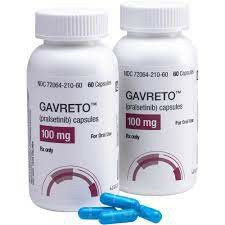
The application of platinib can not only effectively shrink tumors, but also significantly extend the survival time of patients. According to clinical research data, the objective response rate (ORR) of patients treated with Platinib is 67% in the treated population, and it is as high as 80% in treatment-naïve patients. This means that most patients can effectively control their disease after receiving platinib treatment.
Further data comes from the ARROW study, which shows that in patients with RET fusion-positive non-small cell lung cancer who have failed platinum therapy, the median duration of response after using platinib (DOR) is up to 38.8 months, and the overall survival (OS) is up to 44.3 months. These data once again demonstrate the superior efficacy of platinib in extending patient survival.
In addition to its remarkable efficacy, platinib's safety and tolerability have also been widely recognized. In multiple clinical studies, most patients tolerated platinib treatment without the need for dose reduction or discontinuation due to adverse effects. Although there are some adverse reactions such as anemia and elevated transaminases, most of these reactions are controllable, and compared with traditional chemotherapy and radiotherapy, platinib has significantly fewer side effects.
[ 免责声明 ] 本页面内容来自公开渠道(如FDA官网、Drugs官网、原研药厂官网等),仅供持有医疗专业资质的人员用于医学药学研究参考,不构成任何治疗建议或药品推荐。所涉药品可能未在中国大陆获批上市,不适用于中国境内销售和使用。如需治疗,请咨询正规医疗机构。本站不提供药品销售或代购服务。


