
.jpeg)
How effective is the targeted drug ribociclib (ribociclib) in treating breast cancer?
Ribociclib (Ribociclib) is a cyclin-dependent kinase 4/6 (CDK4/6) inhibitor used to treat inflammatory bowel disease. Advanced breast cancer that is hormone receptor positive (HR+) and human epidermal growth factor receptor 2 negative (HER2-). Its efficacy has been widely verified in clinical trials. Its efficacy will be described in detail below based on clinical trial data.
1. Clinical trial design:The efficacy of Ribociclib mainly comes from the MONALEESA series of clinical trials, including MONALEESA -2, MONALEESA-3 and MONALEESA-7 and many other clinical trials. These trials primarily evaluated the efficacy and safety of ribociclib in combination with endocrine therapy compared with endocrine therapy alone.
2. Progression-free survival (PFS): The MONALEESA-2 trial is one of the important clinical trials of ribociclib (ribociclib) in the treatment of HR+, HER2- advanced breast cancer. The trial results showed that treatment with ribociclib (ribociclib) in combination with an AI significantly prolonged PFS compared with an aromatase inhibitor (AI) alone. The study results showed that the median progression-free survival of ribociclib (ribociclib) combined with AI was about 25.3 months, while the median progression-free survival of AI alone was about 16.0 months.
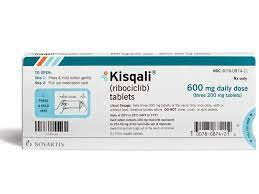
3. Overall survival (OS): exceptIn addition to PFS ribociclib (ribociclib) combined with endocrine therapy has also shown a positive impact on patient overall survival. In the MONALEESA-3 trial, the results showed that ribociclib (ribociclib) combined with a nonsteroidal aromatase inhibitor (such as efedone) significantly prolonged the overall survival of patients compared with endocrine therapy alone.
4. Clinical application: Based on the results of clinical trials, ribociclib (ribociclib) has been widely incorporated into clinical practice and included in multiple breast cancer treatment guidelines. It is considered one of the first-line treatment options for the treatment of HR+, HER2- advanced breast cancer, and plays an important role in improving patient survival rates and improving quality of life.
5. Safety: In clinical trials, the main adverse reactions of ribociclib (ribociclib) include hematological toxicity (such as leukopenia and anemia), gastrointestinal reactions (such as nausea, vomiting, diarrhea), fatigue and QT interval prolongation. However, most adverse effects are mild or manageable and can be managed with dose adjustment or supportive care.
Based on clinical trial data, ribociclib (ribociclib) combined with endocrine therapy has shown significant efficacy and safety in the treatment of HR+, HER2- advanced breast cancer. It extends the progression-free survival and overall survival of patients, improves the success rate of treatment, and brings new treatment options to breast cancer patients. However, patients should be closely monitored for adverse effects while receiving treatment and appropriately managed as needed.
[ 免责声明 ] 本页面内容来自公开渠道(如FDA官网、Drugs官网、原研药厂官网等),仅供持有医疗专业资质的人员用于医学药学研究参考,不构成任何治疗建议或药品推荐。所涉药品可能未在中国大陆获批上市,不适用于中国境内销售和使用。如需治疗,请咨询正规医疗机构。本站不提供药品销售或代购服务。


