
.jpeg)
What is the efficacy of combined treatment with osimertinib and gefitinib?
The clinical efficacy of the combination therapy of osimertinib and gefitinib has received widespread attention and research in recent years. This dual-targeted combination therapy shows unique advantages and potential in the treatment of non-small cell lung cancer (NSCLC), especially for patients with EGFR mutations. The clinical efficacy of this combination therapy is discussed in detail below.
Osimertinib, as a third-generation EGFR inhibitor, can specifically inhibit EGFR sensitive mutations and T790M resistant mutations, thereby blocking the growth and spread of tumor cells. However, although osimertinib has achieved remarkable results in the treatment of non-small cell lung cancer, long-term use may still induce drug resistance. As a first-generation EGFR inhibitor, gefitinib is slightly less effective than osimertinib, but it still has an inhibitory effect on certain EGFR mutation types, and in some cases, it may be effective against osimertinib-resistant C797S mutations.
Based on the characteristics of these two drugs, researchers proposed a combination treatment plan of osimertinib and gefitinib, hoping to delay the occurrence of drug resistance and improve the therapeutic effect by simultaneously inhibiting different EGFR mutation types.
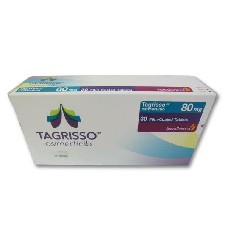
At2020ASCO annual meeting, American scholars announced an I/I Preliminary data from the Phase I clinical study (NCT03122717, abstract number 9507). The study included 27 untreated patients with EGFR mutated advanced non-small cell lung cancer who were treated with osimertinib combined with gefitinib as first-line treatment. The results show that this dual EGFR targeting drug combination has tolerable side effects and can quickly clear EGFR mutations in plasma. The objective response rate of this regimen is 89%, and the disease control rate is 100%, and the estimated median progression-free survival (PFS) is 22.5 months, which is better than the previous data of osimertinib alone (18.9 months).
This preliminary research data provides strong support for the combination treatment of osimertinib and gefitinib, showing the advantages of this combination regimen in terms of efficacy.
In addition to the aboveI/II phase clinical studies, there are also some subsequent clinical studies to further verify the efficacy of the combination treatment of osimertinib and gefitinib. Among them, the Peter Macallum Cancer Center in Melbourne, Australia, launched a 2 phase 2 clinical trial (OSCIL LATE), this trial adopted a second-line treatment regimen of rotating osimertinib and gefitinib for patients with T790Mpositive NSCLC. The study results showed that this regimen was well tolerated, but its clinical efficacy was similar to that of osimertinib alone.
Although the OSCILLATE trial did not show a significant advantage of the combination therapy, it is worth noting that the patients enrolled in the trial were all 1-2< /span>GenerationEGFR-TKIresistant late stageNSCLC patients, and there are multiple resistance mechanisms. Therefore, for treatment-naïve patients with EGFR mutations, the combined treatment effect of osimertinib and gefitinib may be better[2].
About 50% of patients who are resistant to gefitinib in the first line will develop T790M mutations, and osimertinib can solve this part of the problem; about 50% of patients who are resistant to gefitinib in the first line will develop resistance. 7%-25% of patients will develop the C797S mutation, and gefitinib is effective against the C797S mutation. Therefore, the combined use of these two drugs can cover more EGFR mutation types and delay the occurrence of drug resistance.
By alternating the use of osimertinib and gefitinib, it is possible to alter the selective pressures that drive the evolution of cancer cells, thereby delaying the development of tumor drug resistance.
[ 免责声明 ] 本页面内容来自公开渠道(如FDA官网、Drugs官网、原研药厂官网等),仅供持有医疗专业资质的人员用于医学药学研究参考,不构成任何治疗建议或药品推荐。所涉药品可能未在中国大陆获批上市,不适用于中国境内销售和使用。如需治疗,请咨询正规医疗机构。本站不提供药品销售或代购服务。


