
.jpeg)
Adding ibrutinib/ibrutinib to chemoimmunotherapy induction improves FFS in young MCL patients
In young, healthy patients with mantle cell lymphoma (MCL), ibrutinib/ibrutinib (I brutinib) combined with chemoimmunotherapy induction and autologous stem cell transplantation (ASCT) for first-line treatment, followed by ibrutinib maintenance therapy, has better efficacy than chemoimmunotherapy induction and ASCT alone. During the trial, patients were randomly assigned to receive chemoimmunotherapy plus ASCT (arm A; n = 288), ibrutinib plus chemoimmunotherapy and ASCT (arm A+I; n = 292), or ibrutinib plus chemoimmunotherapy without ASCT.
With a median follow-up of 31 months (95% CI, 30.1-33.0), the 3-year failure-free survival (FFS) rate of A group was 72% (95% CI, 67%-79%), and 88% (95% CI, 84%-92%) in the A+I group (HR, 0.52; one-sided 98.3% CI, 0.00-0.86; one-sided P=0.008). This benefit was consistent across subgroups, including MCL International Prognostic Index (MIPI) status, cytology, Ki-67 index, and rituximab (Rituxan) maintenance. The benefit from FFS was significant if patients in the A+I group had high p53 expression (HR, 0.14; one-sided 98.3% CI, 0.00-0.57) or high-risk biology (MIPI or p53 immunohistochemistry combined with high expression >50%; HR, 0.31; one-sided 98.3% CI, 0.00-0.78).
In addition,The 3-year FFS rate in group A was 72% (95% CI, 67%-79%), compared with 86% (95% CI, 82%-91%) in group I (HR, 1.77; one-sided 98.3% CI, 0.00-3.76; one-sided P=0.99979). The Phase 3 trial demonstrates superior efficacy of ibrutinib-containing [chemoimmunotherapy] compared with pretrial standard approaches for ASCT consolidation and defines a new standard of care for first-line treatment of young, fit [MCL patients]. ASCT has additional toxicities and it is uncertain whether it can still add benefit to ibrutinib-based treatment in a subset of patients.
TRIANGLE enrolled patients aged 18 to 65 years with previously untreated, histologically confirmed MCL with Ann Arbor stages II to IV. Patients needed to be suitable for ASCT treatment, have at least 1 measurable lesion, and have an ECOG performance status of 2 or less. Exclusion criteria included anticoagulation with warfarin or an equivalent vitamin K antagonist, or treatment with a strong CYP3A4 or CYP3A5 inhibitor; a history of intracranial hemorrhage within 6 months of randomization; and known central nervous system involvement. Patients were randomly divided into 1:1:1 to 3 treatment groups: Group A, Group A+I and Group I.
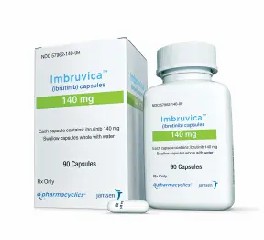
The primary endpoint of the study was investigator-assessed FFS, which was defined as the time from randomization to stable disease at the end of induction immunochemotherapy, disease progression, or death from any cause in the trial, whichever occurred first. Secondary endpoints include overall survival (OS), progression-free survival (PFS), duration of response (DOR), complete response rate (CR), conversion rate from partial response (PR) to CR after induction, and safety.
ASCT was completed in 242 and 250 patients in group A and group A+I, respectively. Among patients in the first group, 3 patients completed ASCT, which was different from the assigned study group. 238 patients in group A+I started to maintain ibrutinib; 260 patients in group I started to maintain ibrutinib. Among patients who initiated maintenance with a BTK inhibitor, 41% of patients in Arm A+I and 32% in Arm I discontinued ibrutinib maintenance more than 2 weeks before the end of 2 years.
The 3-year OS incidence rate was 86% (95% CI, 82%-91%) in group A, 91% (95% CI, 88%-95%) in group A+I, and 92% (95% CI) in group I. The 3-year response rate was 76% (95% CI, 70%-83%) in group A, 88% (95% CI, 84%-93%) in group A+I, and 87% (95% CI, 82%-92%) in group I (group A+I and group A The HR of group A was 0.52; one-sided 98.3% CI, 0.00-0.84; P=0.0021; the HR of group A and group I was 1.80; one-sided 98.3% CI, 0.00-2.91; P>0.99).
At the end of induction,The CR rate in group A+I and group I was 45% (95%CI, 41%-49%), while that in group A was 36% (95%CI, 30%-42%) (P=0.020). The overall effective rates were 98% (95%CI, 97%-99%) and 94% (95%CI, 91%-97%) respectively (P=0.0025). Among patients who initially experienced PR, 62% (95% CI, 54%-70%) in arm a achieved CR during follow-up, compared with 66% (95% CI, 58%-74%) in arm a+I and 57% (95% CI, 49%-65%) in arm I. The main causes of death were progressive lymphoma (group A, 6%; group A+I, 1%; group I, 4%) and other comorbidities (4%; 2%; 2%). Treatment-related deaths occurred in 1% of arm A and 1% of arm A+I, with no treatment-related deaths in arm I.
More patients experienced disease progression or death in group A (n=67) than in group A+I (n=34) or group I (n=35). The 3-year PFS incidence rate was 73% (95% CI, 67%-79%) in group A, 88% (95% CI, 84%-93%) in group A+I, and 87% (95% CI, 83%-92%) in group I (A+I vs. A The HR of A and I was 0.46; one-sided 98.3%CI, 0.00-0.72; one-sided P=0.001; the HR of A and I was 2.10; 95%CI, 0.00-3.28; P>0.99).
During induction therapy, the most commonGrade 3 to 5 adverse reactions (AEs) were related to hematological and lymphatic system disorders and occurred in 71% of R-CHOP/R-DHAP-treated patients and 76% of IR-CHOP/R-DHAP-treated patients. These include thrombocytopenia, decreased neutrophil count, and anemia. Blood and lymphatic system disorders were the main grade 3 to 5 AEs during ASCT, affecting 59% of 245 patients in the R-CHOP/R-DHAP group and 159% of 254 patients in the IR-CHOP/R-DHAP group. Other grade 3-5 AEs during ASCT included general illness and administration site conditions; gastrointestinal illness; and infection.
During the maintenance or follow-up period, more grade 3 to 5 AEs were reported in Arms A+I and I compared to ArmsA. Hematologic and lymphatic system disorders were observed in 50% of patients in group A+I (n=231), 28% of patients in group I (n=269), and 21% of patients in group A (n=238), with decreased neutrophil counts being the most common. Infections were reported in 25% of patients in group A+I, 19% in group I, and 13% in group A. Furthermore, infection was the most common fatal AE during ASCT and during maintenance or follow-up.
[ 免责声明 ] 本页面内容来自公开渠道(如FDA官网、Drugs官网、原研药厂官网等),仅供持有医疗专业资质的人员用于医学药学研究参考,不构成任何治疗建议或药品推荐。所涉药品可能未在中国大陆获批上市,不适用于中国境内销售和使用。如需治疗,请咨询正规医疗机构。本站不提供药品销售或代购服务。


