
.jpeg)
Aceminib Latest News: Aceminib Produces Safe, Durable Responses in Previously Treated Chronic Myeloid Leukemia (CML)
Assiminib (Scemblix) has been reported to be more effective and safer than bosutinib (Bosulif) in patients with chronic myeloid leukemia chronic phase (CML-CP) who are receiving 2 or more tyrosine kinase inhibitors (TKIs).
Most patients with chronic-phase CML who receive long-term TKI therapy do have the potential to develop long-term chronic health problems, and those who have failed at least 2 prior TKIs face additional challenges, such as high frequencies of resistance-causing mutations and toxicities.
Now,Results from the ASCEMBL trial suggest superior efficacy and safety of aximinib versus bosutinib at 24 and 96 weeks in these patients with chronic-phase CML who have received at least 2 prior TKIs.
Week The major molecular response (MMR) rate at week 156 (end of study) continued to be higher with asiminib (33.8%) than with bosutinib (10.5%). After adjusting for baseline, the difference in major cytologic response was 23.2% (95% CI, 13.1%-33.2%; two-sided P < .001). The rate of BCL-ABL1 ≤ 1% at Week 156 in patients without a major cytologic response at baseline (23.2%) remained higher with aximinib than with bosutinib (43.0% vs 11.1%).
In terms of progression-free survival (PFS) and overall survival (OS), the researchers found a 3-year PFS rate of 85.2% (95% CI, 76.8%-90.7%) in the asiminib arm compared with 84.0% 95% CI; 67.5%-92.6%) in the aximinib arm versus bosutinib. The 5-year OS rate was 87.8% (95% CI, 78.7%-93.1%) in the aximinib arm and 89.7% (95% CI, 76.3%-95.7%) in the bosutinib arm.
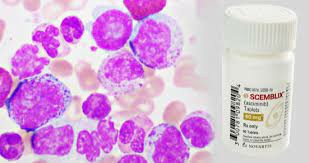
Based on The 2013 ELN recommended that a total of 233 patients with CML-CP who had received ≥ 2 prior TKIs on study, experienced intolerance or lack of efficacy, and were randomized 2:1 to the asiminib cohort (n = 156) or the bosutinib cohort (n = 76)). Patients were treated with aximinib 40 mg twice daily or bosutinib 500 mg once daily.
The researchers noted that if patients receiving bosutinib did not meet the treatment criteria as recommended by the 2013 ELN, they could switch to aceminib and analyze it separately. Patients who are intolerant to bosutinib and discontinue treatment should not be switched to aximinib.
Of the 28 patients who discontinued bosutinib due to lack of efficacy, 25 were switched to aximinib. Nearly all patients who switched (96%) had been treated with BCL-ABL1 >10% before switching. None of the converted patients achieved MMR at or before week 48 after conversion. At week 48, 24% of patients achieved BCL-ABL1 ≤10% and 8% achieved BCL-ABL1 ≤1%.
At the end of the study treatment cutoff date, 77 (49.4%) and 8 (10.5%) patients were still receiving aximinib and bosutinib, respectively. Patients who experienced beneficial activities after the end of the study continued to receive post-trial treatment after evaluation by the investigator.
The common reason for discontinuation of treatment was lack of response in 40 patients (25.5%) receiving aximinib and 28 patients (36.8%) receiving bosutinib.
Despite a longer median exposure to aximinib (156.0 [0.1-256.3] weeks) compared with bosutinib (30.5 [1.0-239.3] weeks), the safety and tolerability of aximinib showed better results than bosutinib, consistent with previous analyses.
Two patients in the study discontinued treatment due to adverse events (AEs) after the week 96 cutoff. One patient receiving aximinib reported pregnancy and another patient receiving bosutinib reported diarrhea. Discontinuation rates were lower with asciminib (8.3%) than with bosutinib (27.6%).
The most common (≥10%) grade 3 AEs with aximinib vs. bosutinib were thrombocytopenia (22.4% vs. 9.2%), neutropenia (18.6% vs. 14.5%), diarrhea (0% vs. 10.5%), and increased alanine aminotransferase (0.6% vs. 14.5%). Most AEs occurred within the first 6 months of treatment.
During the survival follow-up period, an additional six deaths occurred in three patients treated with aximinib, one each from chronic myelogenous leukemia, hemorrhagic stroke, multiple organ dysfunction syndrome, and COVID-19. Three of these patients were treated with bosutinib, one for CML, one for dyspnea, and one for COVID-19.
The safety profile of asiminib remained consistent in patients who switched compared with patients who received asiminib during randomization. The most common (≥10%) grade 3 AEs were neutropenia (32.0%) and thrombocytopenia (24.0%). Eight percent of patients who switched experienced adverse events and discontinued treatment.
Since the cutoff of week the exposure-adjusted incidence of arterial occlusive events (AOE) with aximinib therapy has decreased from 3.0 to 2.2 per 100 patient-years, with no new AOEs occurring with the corresponding drug, highlighting that the risk of AOEs has not increased over time. Since the week 96 cutoff, no new mutations have emerged in patients who discontinued treatment due to lack of efficacy or disease progression.
By the end of the study, new mutations had not changed since week 96, with 7.6% of patients in the aximinib group developing new mutations and 2.6% of patients in the bosutinib group developing new mutations.
[ 免责声明 ] 本页面内容来自公开渠道(如FDA官网、Drugs官网、原研药厂官网等),仅供持有医疗专业资质的人员用于医学药学研究参考,不构成任何治疗建议或药品推荐。所涉药品可能未在中国大陆获批上市,不适用于中国境内销售和使用。如需治疗,请咨询正规医疗机构。本站不提供药品销售或代购服务。


