
.jpeg)
Ritexitinib instructions, usage and dosage, adverse reactions
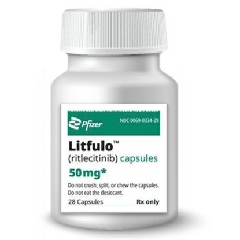
Ritlecitinib (Ritlecitinib) is a highly selective inhibitor of Janus kinase 3 (JAK3) and tyrosine kinases expressed in the hepatocellular carcinoma (TEC) family of kinases. In June 2023, it was approved by the US FDA for the treatment of severe alopecia areata in adults and adolescents aged 12 years and older.
Mechanism of Action: Ritexitinib irreversibly inhibits tyrosine kinases expressed in the Janus kinase 3 (JAK3) and hepatocellular carcinoma (TEC) kinase families by blocking the adenosine triphosphate (ATP) binding site. In a cellular context, ritixitinibinhibits cytokine-induced STAT phosphorylation mediated by JAK3-dependent receptors. In addition, ritixitinib also inhibits immune receptor signaling that is dependent on members of the TEC kinase family. It is unclear how inhibition of specific JAK or TEC family enzymes correlates with therapeutic efficacy.
Usage and Dosage: The recommended dose of ritixitinib is 50 mg orally, once a day, with a meal or alone. Swallow capsule whole. Do not crush, split, or chew capsules. If you miss a dose, take it as soon as possible unless it is less than 8 hours before your next dose, in which case skip the missed dose. Thereafter, resume dosing at regular times.
ADVERSE REACTIONS: Get emergency medical help if you have signs of an allergic reaction: hives, trouble breathing, swelling of the face, lips, tongue, or throat.
Some people taking ritexitinib have experienced heart attacks, strokes, or blood clots. Stop taking ritexitinib and get emergency medical help if you have: signs of blood clots—numbness or weakness on one side of the body, chest pain, vision or speech problems, pain or swelling in one leg, sudden cough, or Shortness of breath, wheezing, dizziness, shortness of breath, coughing up blood; orheart attackSymptoms—chest pain or tightness, pain spreading to jaw or shoulders, nausea, sweating.
Ritexitinib may cause serious side effects. Call your doctor right away if you have: Signs of infection—fever, chills,sore throat, body aches, easy bruising or bleeding; Symptoms
Common side effects of ritexitinib may include: headache, dizziness, fever; acne, itching, hives, burning, rash, dryness, or inflammation of the skin; inflammation of the hair follicles (folliculitis); low red blood cell count (anemia); diarrhea; abnormal blood tests; or blisters or sores in the mouth, red or swollen gums, or difficulty swallowing. This is not a complete list of side effects, and other side effects may occur. Regardless of any physical discomfort the patient experiences while taking ritexitinib, the patient should go to the hospital for medical treatment immediately.
Cautions: Increased risk of serious bacterial, fungal, viral, and opportunistic infections that may lead to hospitalization or death, including tuberculosis (TB). If serious infection occurs, interrupt treatment until infection is controlled. Patients with active tuberculosis should not take ritexitinib. Test for latent tuberculosis before and during treatment; initiate treatment of latent tuberculosis before use. Monitor all patients for active tuberculosis during treatment, even those who initially test negative for latent tuberculosis. Monitor all patients for signs and symptoms of infection during and after treatment with ritixitinib.
In patients with rheumatoid arthritis Use of another Janus kinase inhibitor (JAK) compared with TNF blockers was associated with greater all-cause mortality, including sudden cardiovascular death. Ritexitinib is not approved for use in patients with RA.
Malignancy has been reported in patients treated with rituxitinib. In patients with RA, use of another JAK inhibitor was associated with a higher incidence of lymphoma and lung cancer compared with TNF blockers.
In patients with RA, the incidence of MACE (defined as cardiovascular death, myocardial infarction, and stroke) was higher with another JAK inhibitor compared with TNF blockers.
Thrombosis has occurred in patients treated with ritixitinib. withAnother JAK inhibitor is associated with an increased incidence of pulmonary embolism and venous and arterial thrombosis compared to TNF blockers.
Storage: Store at room temperature, away from moisture and heat.
[ 免责声明 ] 本页面内容来自公开渠道(如FDA官网、Drugs官网、原研药厂官网等),仅供持有医疗专业资质的人员用于医学药学研究参考,不构成任何治疗建议或药品推荐。所涉药品可能未在中国大陆获批上市,不适用于中国境内销售和使用。如需治疗,请咨询正规医疗机构。本站不提供药品销售或代购服务。


