
.jpeg)
Must-read for patients: Overview of basic information in the instructions for ibrutinib/ibrutinib
1. Generic name: ibrutinib, Ibrutinib
Product name: Yike, IMBRUVICA
Other names: ibrutinib, ibrutinib
2. Who can take ibrutinib/ibrutinib? Indications?
Ibrutinib is indicated to treat the following conditions:
1. Chronic lymphocytic leukemia/Small lymphocytic lymphoma (CLL/SLL): It is suitable for the treatment of adult patients with chronic lymphocytic leukemia/small lymphocytic lymphoma, whose symptoms may include 17p deletion.
2. Waldenström's macroglobulinemia (WM): Suitable for the treatment of adult patients with Waldenström's macroglobulinemia, also known as Waldenström's macroglobulinemia (WM).
3. Chronic graft-versus-host disease (cGVHD): It is suitable for the treatment of adult and pediatric patients 1 year old and above suffering from chronic graft-versus-host disease after failure of one or more systemic treatments.
3. Ibrutinib/What are the side effects of ibrutinib?
Very common side effects of ibrutinib include pneumonia, upper respiratory tract infection, sinusitis, skin infection, low neutrophil count, low platelet count, headache, bleeding, bruising, diarrhea, vomiting, lip inflammation, nausea, constipation, rash, joint pain, muscle cramps, musculoskeletal pain, fever, and edema.
4. How should I take ibrutinib/ibrutinib?
1. Recommended dosage:
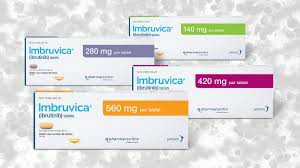
(1) CLL/SLL and WM: The recommended dose of ibrutinib is 420 mg orally once daily until disease progression or unacceptable toxicity. For CLL/SLL, ibrutinib can be administered as a single agent, in combination with rituximab or obinutuzumab, or in combination with bendamustine and rituximab (BR). For WM, ibrutinib can be administered as a single agent or in combination with rituximab.
(2) cGVHD: The recommended dose of ibrutinib is 420 mg orally once daily for patients with cGVHD 12 years of age and older, and 240 mg/m2 orally once daily for patients 1 to 12 years of age with cGVHD (maximum dose is 420 mg) until progression of cGVHD, recurrence of underlying malignancy, or unacceptable toxicity. When a patient no longer requires treatment for cGVHD, ibrutinib should be discontinued taking into account the individual patient's medical evaluation.
2. Medication management: Take ibrutinib at approximately the same time every day. Swallow the tablet or capsule with a glass of water. Do not open, break or chew capsules. Do not cut, crush, or chew tablets. For further dosing details of ibrutinib oral suspension, see Instructions for Use. If a dose of ibrutinib is not taken at the scheduled time, it can be taken as soon as possible that day and return to normal the next day. Do not take extra doses of ibrutinib to make up for a missed dose.
5. How to store ibrutinib/ibrutinib?
Ibrutinib is available as capsules (70 mg, 140 mg), tablets (140 mg, 280 mg, 420 mg), and oral suspension (70 mg/mL). Store bottles at room temperature between 20°C and 25°C (68°F and 77°F) and allow brief exposure to 15°C and 30°C (59°F and 86°F). Keep in original packaging until dispensed. Do not freeze oral suspension bottles and do not use if carton seal is broken or missing.
6. Ibrutinib/How does ibrutinib work?
Ibrutinib is a small molecule inhibitor of Bruton's tyrosine kinase (BTK). Ibrutinib forms a covalent bond with the cysteine u200bu200bresidue in the active site of BTK, resulting in the inhibition of BTK enzyme activity. BTK is a signaling molecule of the B cell antigen receptor (BCR) and cytokine receptor pathways. BTK's role in signaling through B cell surface receptors leads to the activation of pathways required for B cell trafficking, chemotaxis, and adhesion. Non-clinical studies have shown that ibrutinib inhibits the proliferation and survival of malignant B cells in vivo and inhibits cell migration and matrix adhesion in vitro.
7. What will happen if you overdose on ibrutinib/ibrutinib?
There is no specific experience with the management of overdose in patients taking ibrutinib. One healthy subject experienced reversible grade 4 elevations in liver enzymes (AST and ALT) after taking a dose of 1680 mg. Monitor patients who ingest more than the recommended dose closely and provide appropriate supportive care.
[ 免责声明 ] 本页面内容来自公开渠道(如FDA官网、Drugs官网、原研药厂官网等),仅供持有医疗专业资质的人员用于医学药学研究参考,不构成任何治疗建议或药品推荐。所涉药品可能未在中国大陆获批上市,不适用于中国境内销售和使用。如需治疗,请咨询正规医疗机构。本站不提供药品销售或代购服务。


