
.jpeg)
Effectiveness and evaluation of ensidipine in the treatment of AML
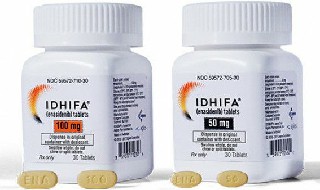
Enasidenib (Enasidenib), as a targeted drug designed to treat acute myeloid leukemia (AML) with specific gene mutations, has recently demonstrated its unique anti-cancer potential in clinical trials. Here’s an in-depth look at its efficacy:
1. The efficacy of IDH2gene mutationAML
In multiple clinical studies of AML patients with IDH2 gene mutations, the therapeutic effects of ensidipine have been compelling. Especially the AG221-C-001 study, which is a multi-center, open-label Phase II clinical trial, specifically Focus on evaluating the therapeutic performance and safety of ensidipine in refractory or relapsed AML harboring IDH2 mutations.
Trial data show that among patients treated with ensidipine, the overall response rate (ORR) was as high as 38.8% . Among them, the proportion of patients with complete remission (CR) was 19.3%, and the proportion of patients with partial remission (PR) was 19.5%. What is more worth mentioning is that the patients' median progression-free survival (PFS) and median overall survival (OS) were 5.8 months and 9.3 months respectively.
2. Drug persistence and drug resistance
While Encidipine isAMLIt brings new hope to patients, but some patients may develop drug resistance after a period of treatment. Studies indicate that 20% to 40% of patients treated with ensidipine may achieve complete or partial remission, but the average resistance time may range from a few months to a year. This reminds us that for those patients who develop drug resistance, we need to explore other treatment strategies or consider combining drugs to maintain the therapeutic effect.
On the other hand, however, ensidipine demonstrated sustained efficacy in some patients. A long-term follow-up study showed that the remission status of some patients was sustained after treatment with ensidipine, and some patients even had a remission period of more than one year.
3. Safety and Tolerability Considerations
The safety and tolerability of ensidipine have been extensively demonstrated in clinical trials. Common adverse reactions mainly include gastrointestinal symptoms such as nausea, vomiting, diarrhea, and general discomfort such as fatigue. Although ensidipine may also cause serious adverse reactions such as arrhythmia, bleeding, infection, etc., most of these reactions are controllable and manageable under close monitoring by a doctor.
In summary, the efficacy of ensidipine as a targeted drug against AML with IDH2 gene mutations has been verified in clinical trials. Despite the challenge of drug resistance, its sustained efficacy in some patients is commendable. At the same time, its relatively good safety and tolerability also bring more treatment options to patients. Of course, each patient's specific response may vary, so the use of ensidipine still needs to be evaluated on a case-by-case basis and the patient's response must be closely monitored.
[ 免责声明 ] 本页面内容来自公开渠道(如FDA官网、Drugs官网、原研药厂官网等),仅供持有医疗专业资质的人员用于医学药学研究参考,不构成任何治疗建议或药品推荐。所涉药品可能未在中国大陆获批上市,不适用于中国境内销售和使用。如需治疗,请咨询正规医疗机构。本站不提供药品销售或代购服务。


