
.jpeg)
How long should neratinib/neratinib be taken after the end of targeting?
Neratinib/Neratinib (Neratinib) is an oral small molecule inhibitor that irreversibly binds to pan-HER receptor tyrosine kinase and inhibits EGFR, HER2, HER4, AKT, and MEK phosphorylation in HER2+ breast cancer. Preclinical data in breast cancer cell lines indicate that neratinib can overcome trastuzumab resistance in HER2+ breast cancer (BC). Whether to take neratinib after targeted therapy ends depends on several factors, including the patient's condition, the extent of the disease, and the doctor's prescription. Generally, neratinib needs to be taken after other treatments (such as surgery, chemotherapy, radiotherapy, etc.).
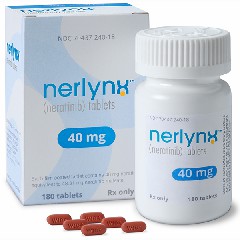
A phase II open-label study of oral neratinib showed that the progression-free survival (PFS) of patients who had previously received trastuzumab was 22.3 weeks and the overall response rate (ORR) was 24%. The PFS of patients who had not received trastuzumab was 39.6 weeks and the ORR was 56%. Another phase II study comparing neratinib to lapatinib plus capecitabine in second-line therapy reported inconclusive results.
Some patients may need to start taking neratinib during targeted therapy to assist the effects of other targeted drugs; while some patients may need to continue taking it for a period of time after the targeted therapy ends to consolidate the therapeutic effect or prevent the recurrence of the disease. Therefore, when taking neratinib, patients should fully understand their treatment plan and medication purposes in order to better cooperate with treatment. In addition, the taking time of neratinib may also be affected by some other factors, such as the metabolism rate of the drug and the patient's tolerance.
[ 免责声明 ] 本页面内容来自公开渠道(如FDA官网、Drugs官网、原研药厂官网等),仅供持有医疗专业资质的人员用于医学药学研究参考,不构成任何治疗建议或药品推荐。所涉药品可能未在中国大陆获批上市,不适用于中国境内销售和使用。如需治疗,请咨询正规医疗机构。本站不提供药品销售或代购服务。


