
.jpeg)
Analysis of the efficacy of ensidipine in patients with leukemia
Ensidipine, a targeted drug for relapsed or refractory acute myeloid leukemia (AML) carrying IDH2 mutations, has attracted widespread attention in the medical community in recent years. Its unique efficacy has been fully verified in multiple rigorous clinical trials, bringing new hope to many leukemia patients.
In a series of carefully designed clinical trials, the efficacy of ensidipine was objectively and comprehensively evaluated. Among them, the high-profile AG221-C-001 study adopted a randomized, double-blind, placebo-controlled multi-center trial, aiming to deeply explore the therapeutic effect of ensidipine on AML patients.
The results of this study are encouraging. Data show that the complete response rate (CR) of the patient group receiving ensidipine treatment was as high as CR as high as , while in comparison, the CR of the placebo group was only CR 1.6%. This significant difference fully proves the excellent effect of ensidipine in improving the complete remission rate of AML patients.
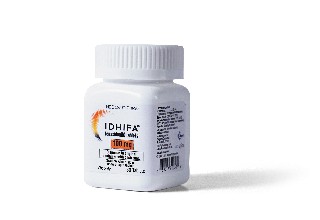
The partial response rate (PR) of the ensidipine treatment group was also excellent, reaching 8.0%, which was much higher than the 1.6% of the placebo group. This means that even when complete remission is not achieved, ensidipine can effectively promote partial remission of the disease, giving patients more treatment opportunities and time.
Ensidipine also showed its advantages in terms of progression-free survival (PFS). The median progression-free survival of the treatment group was 9.3 months, which was significantly better than the 5.6 months of the placebo group. The extension of this data not only reflects the ability of ensidipine in controlling disease progression, but also provides patients with longer survival and quality of life.
Any medication is inevitably accompanied by certain side effects. During ensidipine treatment, some patients may experience symptoms such as nausea, vomiting, fatigue, and anemia. In addition, more serious adverse reactions such as cytokine release syndrome and liver damage may occur. Therefore, when using ensidipine, doctors need to pay close attention to the patient's response and adjust the treatment plan in a timely manner to ensure the patient's safety.
The remarkable efficacy of ensidipine in clinical trials undoubtedly provides a new treatment strategy for AML patients, especially those whose traditional treatments are ineffective or whose disease is refractory. Its precise treatment of IDH2 mutations not only improves the therapeutic effect, but also opens up a new path for personalized treatment of AML.
In general, ensidipine has demonstrated impressive efficacy in clinical trials due to its unique targeted therapeutic mechanism. Although there are certain side effects and safety issues, its excellent performance in improving the complete response rate, partial response rate and extending progression-free survival of AML patients has undoubtedly brought new treatment hope and better quality of life to patients. With the continuous deepening of medical research and the accumulation of practical experience, it is believed that ensidipine will bring good news to more leukemia patients in the future.
[ 免责声明 ] 本页面内容来自公开渠道(如FDA官网、Drugs官网、原研药厂官网等),仅供持有医疗专业资质的人员用于医学药学研究参考,不构成任何治疗建议或药品推荐。所涉药品可能未在中国大陆获批上市,不适用于中国境内销售和使用。如需治疗,请咨询正规医疗机构。本站不提供药品销售或代购服务。


