
.jpeg)
The mechanism of action of ensidipine in the treatment of leukemia
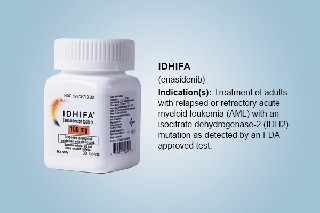
Enasidenib is a drug that targets relapsed or refractory acute myeloid leukemia (AML) that carries isocitrate dehydrogenase 2 (IDH2) mutations. Its mechanism of action involves regulating abnormal metabolic pathways and restoring normal hematopoietic function, thereby inhibiting the growth and proliferation of leukemia cells and promoting the apoptosis of leukemia cells.
1.Suppression of abnormal metabolic pathways: In AML patients, IDH2 gene mutations lead to abnormal activity of certain enzymes, which in turn leads to abnormal cellular metabolic pathways. As an IDH2 inhibitor, ensidipine can specifically inhibit the activity of mutated IDH2 enzyme and block abnormal metabolic pathways. By inhibiting the activity of the IDH2 enzyme, ensidipine helps reduce the levels of 2-hydroxyglutarate (2-HG) in leukemia cells, thereby reducing the adverse effects on normal hematopoietic processes.
2.Promote leukemia cell apoptosis: The abnormal metabolic pathways of leukemia cells and the accumulation of 2-HG may lead to cell proliferation and inhibition of apoptosis. Ensidipine inhibits the activity of IDH2 enzyme and reduces the accumulation of 2-HG, thereby destroying the metabolic balance of leukemia cells and promoting cell apoptosis. This helps reduce the number of leukemia cells and halts the progression of the disease.
3.Restore normal hematopoietic function: In addition to acting directly on leukemia cells, ensidipine may also help restore normal hematopoietic function. By reducing the accumulation of 2-HG, ensidipine can alleviate the adverse effects on normal hematopoietic cells and promote the recovery of hematopoietic function. This helps improve the patient's hematopoietic function, alleviate symptoms such as anemia and bleeding, and improve the patient's quality of life.
In summary, ensidipine plays a role in the treatment of AML by inhibiting the activity ofIDH2enzyme, regulating abnormal metabolic pathways, promoting apoptosis of leukemia cells, and restoring normal hematopoietic function. function. Understanding its mechanism of action helps guide clinical application and provides an important reference for further research and development of related drugs.
[ 免责声明 ] 本页面内容来自公开渠道(如FDA官网、Drugs官网、原研药厂官网等),仅供持有医疗专业资质的人员用于医学药学研究参考,不构成任何治疗建议或药品推荐。所涉药品可能未在中国大陆获批上市,不适用于中国境内销售和使用。如需治疗,请咨询正规医疗机构。本站不提供药品销售或代购服务。


