
.jpeg)
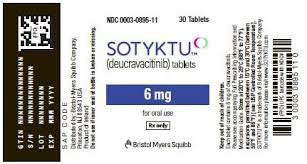
The latest domestic Chinese version of instructions for deuterated colexitinib
Indications:
For the treatment of patients with moderate to severe plaque psoriasis who are candidates for systemic therapy or phototherapy. Not recommended for use in combination with other potent immunosuppressants
Mechanism of action:
Deuterated colexitinib is primarily involved in the specific inhibition of tyrosine kinase 2 (TYK2). TYK2 is an important member of the Janus kinase (JAK) family and is involved in a variety of cell signaling processes. Deuterated colexitinib is an oral, selective allosteric inhibitor of TYK2 that stabilizes the inhibitory interaction between the regulatory or catalytic domains of the enzyme by selectively binding to the regulatory domain of TYK2. This process blocks receptor-mediated activation of TYK2 and its downstream signaling pathway transducers and transcriptional activators (STATs), thereby inhibiting cell signaling and immune responses mediated by TYK2.
Medication method:
The recommended dose is 6 mg per time, taken orally once a day.
Side effects:
1.Gastrointestinal discomfort: This is one of the most common side effects and includes symptoms such as nausea, vomiting, diarrhea and indigestion. These symptoms are usually mild and may gradually lessen over time. Patients can reduce these side effects by adjusting the medication time or eating habits, such as avoiding spicy, greasy and other irritating foods, and maintaining adequate fluid intake.
2.Headache and fatigue: Some patients may experience neurological side effects such as headache and fatigue. These side effects are generally temporary and will gradually lessen as the patient adapts to the medication. Patients can reduce these side effects by resting and maintaining good lifestyle habits.
3.Skin rash and itching: A small number of patients may experience skin symptoms such as rash, itching, dry skin or scaling. This may be related to the drug's effect on skin metabolism. When these skin reactions occur, patients should consult their doctor immediately and follow their doctor's instructions.
4.Immunosuppression: Deuterated coxitinib has immunosuppressive effects and may increase the patient's risk of infection with pathogens. Therefore, patients need to strengthen personal hygiene, avoid contact with infectious sources, and regularly check blood routine and other indicators to prevent the occurrence of serious infections.
5.Anemia, leukopenia, and thrombocytopenia: Deuterated coxitinib may cause changes in blood parameters, including symptoms of anemia, leukopenia, and thrombocytopenia. Patients should undergo regular blood tests while taking the drug to ensure the stability of blood parameters.
6.Severe allergic reactions: including dizziness, facial swelling, difficulty breathing and other symptoms, the drug should be stopped immediately and seek medical attention.
7.Cancer risk: Long-term use may increase the risk of cancers such as lymphoma, but this is rare.
8.Muscle problems: This may lead to serious muscle problems such as rhabdomyolysis, which may manifest as muscle pain, tenderness, or weakness.
Warnings and precautions:
Patients with liver disease: In patients with known or suspected liver disease, liver enzymes should be evaluated at baseline and periodically thereafter to ensure that the drug is not causing further damage to the liver.
Risk of Malignancy: Consideration of patient risk for malignancy, particularly in patients with known malignancy (other than successfully treated non-melanotic skin cancer), should be adequately evaluated prior to use.
Drug interactions:
Combined use of deuterated colexitinib with immunosuppressants such as cyclosporineA and tacromofit may increase the patient's risk of infection
Medication for special populations:
Pregnant and lactating women, and patients with liver disease should use this medication with caution.
[ 免责声明 ] 本页面内容来自公开渠道(如FDA官网、Drugs官网、原研药厂官网等),仅供持有医疗专业资质的人员用于医学药学研究参考,不构成任何治疗建议或药品推荐。所涉药品可能未在中国大陆获批上市,不适用于中国境内销售和使用。如需治疗,请咨询正规医疗机构。本站不提供药品销售或代购服务。


