
.jpeg)
How does cycloserine fight multidrug-resistant tuberculosis?
Cycloserine (Cycloserine), as an antibiotic specifically designed to treat tuberculosis, has shown its unique value in the fight against multidrug-resistant tuberculosis (MDR-TB). Its core mechanism of action is to effectively curb the growth and reproduction of Mycobacterium tuberculosis by interfering with the synthesis of bacterial cell walls. Here’s an in-depth look at cycloserine’s mechanism of action.
Cycloserine mainly works by competitively inhibiting two key enzymes, which are alanine lysinase (alanine racemase) and D-alanine-D-alanine synthase (D-alanine-D-alanine ligase). They play a pivotal role in the synthesis pathway of bacterial cell wall peptidoglycan (peptidoglycan). Alanine lysinase is responsible for converting L-alanine into D-alanine, and D-alanine
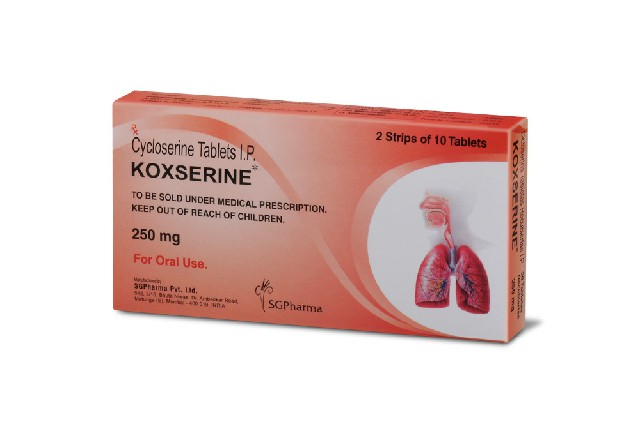
Cycloserine effectively blocks the production of D-alanine and D-alanine dipeptides by inhibiting these two enzymes. This process is crucial for bacteria to build a strong cell wall. Damage to the cell wall causes bacteria to lose their protective barrier and are unable to maintain normal physiological functions and structures, thus inhibiting bacterial growth and reproduction.
Damaged bacterial cell walls make bacteria extremely fragile and more susceptible to impact from the external environment. Bacteria lacking an intact cell wall will undergo cell lysis, that is, cell membrane rupture, in a high-osmotic pressure environment, which may directly lead to bacterial death in some cases. Therefore, although cycloserine is primarily considered a bacteriostatic agent, under certain conditions it may also exhibit bactericidal effects.
Cycloserine's high selectivity for Mycobacterium tuberculosis gives it significant advantages in the treatment of tuberculosis, especially tuberculosis that is resistant to conventional first-line drugs such as isoniazid and rifampicin. Through its unique mechanism of action, cycloserine provides an effective alternative for the treatment of tuberculosis, helping to control and eradicate infections caused by drug-resistant Mycobacterium tuberculosis.
[ 免责声明 ] 本页面内容来自公开渠道(如FDA官网、Drugs官网、原研药厂官网等),仅供持有医疗专业资质的人员用于医学药学研究参考,不构成任何治疗建议或药品推荐。所涉药品可能未在中国大陆获批上市,不适用于中国境内销售和使用。如需治疗,请咨询正规医疗机构。本站不提供药品销售或代购服务。


