
.jpeg)
What are the effects and effects of cabozantinib?
Cabozantinib is a new type of oral targeted drug that is a tyrosinase receptor antagonist. It mainly exerts anti-tumor effects by inhibiting the activity of tyrosinase. It has demonstrated significant efficacy and role in clinical treatment, especially when targeting specific types of cancer.
Cabometinib is available in two main forms, capsules (Cometriq) and tablets (Cabometyx), which target different cancer types. Cometriq (capsule form) was first approved by the U.S. Food and Drug Administration (FDA) in 2012 for the treatment of metastatic medullary thyroid cancer (MTC). The recommended daily dose is 140 mg, which needs to be taken on an empty stomach to ensure optimal absorption. Cabometyx (tablet form) was approved by the FDA in 2016 for the treatment of advanced renal cell carcinoma that has failed first-line anti-angiogenic drugs. It is also used for the treatment of hepatocellular carcinoma and differentiated thyroid cancer. Its recommended dosage varies according to the specific disease and patient conditions.
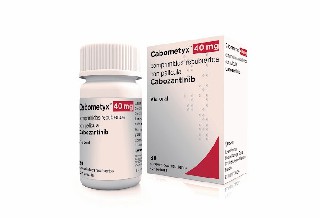
It is worth noting that Although Cometriq and Cabometyx both contain cabozantinib, their formulations are different and therefore cannot be used interchangeably. This is because there are differences in the pharmacokinetic properties of the two dosage forms, such as the time for drug concentration in plasma to reach peak value, half-life, etc., and interchangeable use may affect the efficacy and safety of the drug.
Cabozantinib plays an important role in cancer treatment by inhibiting the activity of tyrosinase, killing tumor cells, reducing tumor metastasis and inhibiting tumor angiogenesis. However, like other targeted drugs, cabozantinib may also cause some adverse reactions, such as diarrhea, stomatitis, etc. Therefore, it is necessary to closely monitor the patient's response during use and adjust the treatment plan in a timely manner.
In general, cabozantinib, as a new type of targeted drug, has shown broad application prospects and significant therapeutic effects in cancer treatment. However, its specific use should be comprehensively considered and individualized according to factors such as the patient's disease type, disease severity, and physical condition.
[ 免责声明 ] 本页面内容来自公开渠道(如FDA官网、Drugs官网、原研药厂官网等),仅供持有医疗专业资质的人员用于医学药学研究参考,不构成任何治疗建议或药品推荐。所涉药品可能未在中国大陆获批上市,不适用于中国境内销售和使用。如需治疗,请咨询正规医疗机构。本站不提供药品销售或代购服务。


