
.jpeg)
Osimertinib instructions, indications, usage and dosage, side effects
Osimertinib (Tagrisso) and its active metabolite act by targeting the EGFR receptor, which irreversibly binds to certain mutated forms of EGFR (T790M, L858R, and exon 19 deletions) at concentrations 9-fold lower than wild-type EGFR. Studies have shown that targeting NSCLC lines harboring these EGFR mutations has antitumor activity, leading to tumor regression and improved survival.
Indications: Osimertinib is an oral kinase inhibitor indicated for the treatment of adult patients with non-small cell lung cancer (NSCLC) who have certain abnormal epidermal growth factor receptor (EGFR) genes. Can be used:
l As adjuvant therapy, it helps prevent the recurrence of lung cancer after surgical removal of the tumor.
l As your first treatment when your lung cancer has spread to other parts of your body (metastasized).
l When your lung cancer has spread to other parts of your body ((metastasis)) and you have previously received EGFR tyrosine kinase inhibitor (TKI) drug treatment but it did not work or no longer works.
l In combination with pemetrexed and platinum-based chemotherapy, it is the treatment of choice when lung cancer has spread to nearby tissues (locally advanced) or to other parts of the body (metastasis).
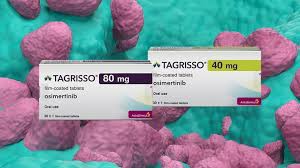
Dosage: Osimertinib is available by prescription only, and treatment should be initiated and supervised by a physician experienced in the use of anticancer drugs. Before starting treatment, doctors should use genetic testing to confirm whether a patient has an EGFR mutation. Osimertinib is available in 40 mg and 80 mg tablets. As long as the condition improves or stabilizes, or there is no recurrence after surgery, and the side effects are tolerable, patients should take 80 mg once a day. If certain side effects occur, your doctor may decide to reduce the dose or stop treatment.
SIDE EFFECTS: Get emergency medical help if a patient using osimertinib has signs of an allergic reaction (hives, difficulty breathing, swelling of the face or throat) or a severe skin reaction (fever, sore throat, burning eyes, peeling, sore skin, red or purple rash with blisters and swelling).
Osimertinib may cause serious side effects. Contact your doctor immediately if you have: red or purple spots on your skin that do not turn white when you press them,24 Redness or bruising that persists after hours (may appear on the arms, legs, buttocks, or abdomen); redness, rash, or blisters on the palms or soles of the feet; new or worsening cough or difficulty breathing; fast or pounding heartbeat; swelling of the lower legs, weight gain, shortness of breath; feeling of dizziness, Like you might pass out; low blood count - fever, chills, tiredness, mouth sores, skin sores, easy bruising, unusual bleeding, pale skin, cold hands and feet; or eye problems - vision changes, watering, increased light sensitivity, eye pain or redness. If you experience certain side effects, your cancer treatment may be delayed or permanently stopped.
Common side effects of osimertinib may include: low blood counts; muscle, bone, or joint pain; diarrhea; fatigue; cough, mouth sores; dry skin, rash; or redness, tenderness, pain, or other problems with your fingernails or toenails. This is not a complete list of side effects, and other side effects may occur. If you experience any discomfort while taking osimertinib, you should consult your doctor immediately.
Precautions: Osimertinib may cause lung problems that can lead to death. Symptoms may be similar to those of lung cancer. Tell your doctor right away if you develop any new or worsening lung symptoms, including difficulty breathing, shortness of breath, cough, or fever.
Osimertinib may cause heart problems, including effects on the heart's electrical system, which may lead to death. Your doctor should check your heart function before you start taking this medication and during treatment. Call your doctor right away if you have any of the following signs and symptoms of heart problems: Feeling like your heart is beating or racing, shortness of breath, swelling in your ankles and feet, feeling dizzy.
Osimertinib may cause eye problems. Tell your doctor right away if you have symptoms of eye problems, including watering, light sensitivity, eye pain, eye redness, or vision changes. Your primary care doctor may refer you to an ophthalmologist.
Osimertinib may cause skin problems. If you experience a skin reaction similar to rings (target lesions), severe blistering, or skin peeling, tell your primary care physician immediately.
Osimertinib may cause blood vessel problems in the skin. Tell your doctor right away if you develop purple spots or red skin on your lower arms, calves, or buttocks that do not fade when pressed (not blanched), or if you develop large hives on major parts of your body that do not go away within 24 hours and appear bruised.
Osimertinib may cause the bone marrow to not produce enough new blood cells (aplastic anemia), which may lead to death. Your primary care doctor will monitor your blood counts before you start treatment and during treatment. Tell your doctor right away if you have any signs or symptoms of blood and bone marrow problems, including: new fever or fever (temperature 100.4°F or higher); easy bruising or infection that won't go away; bleeding that doesn't stop; tiredness; unusually pale skin.
Osimertinib may cause harm to the fetus.
Storage: Store osimertinib at room temperature 68°F to 77°F (20°C to 25°C). Safely throw away expired or no longer needed medications. Keep osimertinib and all medicines out of the reach of children.
[ 免责声明 ] 本页面内容来自公开渠道(如FDA官网、Drugs官网、原研药厂官网等),仅供持有医疗专业资质的人员用于医学药学研究参考,不构成任何治疗建议或药品推荐。所涉药品可能未在中国大陆获批上市,不适用于中国境内销售和使用。如需治疗,请咨询正规医疗机构。本站不提供药品销售或代购服务。


