
.jpeg)
What impact does dasatinib have on survival in patients with acute lymphoblastic leukemia?
Dasatinib, as a targeted drug, is a protein kinase inhibitor and plays an important role in the treatment of leukemia. For patients with acute lymphoblastic leukemia, the use of dasatinib can significantly affect their survival.
Dasatinib mainly works by inhibiting BCR-AMLkinase, SRC family kinases and a variety of selective oncogenic kinase activities. This inhibitory effect helps control the proliferation of leukemia cells for therapeutic purposes. Clinically, dasatinib is mainly used to treat Philadelphia chromosome-positive chronic myelogenous leukemia that is resistant or intolerant to imatinib masulfate. In addition, it can also be used for the treatment of chronic lymphocytic leukemia and chronic myelogenous leukemia in the accelerated phase and blast phase. It is worth noting that dasatinib also shows certain efficacy in Philadelphia chromosome-positive acute lymphoblastic leukemia.
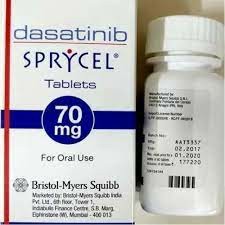
Multiple studies have shown that dasatinib can significantly prolong the survival of patients with acute lymphoblastic leukemia. As long as the patient's condition is stable and they follow the doctor's instructions, most patients can survive for more than 10 years. This data was significantly higher than that of patients not using dasatinib. The use of dasatinib also helps improve patient response rates. This means that more patients can achieve stable disease or remission after receiving treatment, thus further extending survival. Especially for patients with Philadelphia chromosome-positive acute lymphoblastic leukemia, dasatinib can help them achieve remission as early as possible, giving them the opportunity to receive hematopoietic stem cell transplantation.
In addition to directly extending survival, dasatinib also helps improve patient outcomes. By inhibiting the proliferation of leukemia cells and inducing apoptosis, dasatinib can reduce the risk of disease recurrence, thereby improving patients' quality of life.
Although dasatinib has shown significant effects in prolonging the survival of patients with acute lymphoblastic leukemia, its efficacy is still affected by multiple factors.
Different patients respond differently to dasatinib. Some patients may be sensitive to the drug, while others may develop resistance or intolerance to the drug. The severity of a patient's condition can also affect how well dasatinib works. Patients who are caught and treated early tend to respond better to drugs and live longer. Dasatinib is usually used in combination with other treatments (such as chemotherapy, biological immunotherapy, etc.). Reasonable treatment options and timing are crucial to improving efficacy and prolonging survival.
In order to ensure the efficacy and safety of dasatinib, patients should use the drug correctly according to the doctor's instructions and avoid increasing or decreasing the dosage at will.
In order to understand the control of the disease, patients need to undergo relevant examinations and monitoring regularly. This helps to detect and deal with possible problems in a timely manner. Good living habits such as balancing work and rest, maintaining an optimistic and cheerful attitude, and reasonably matching three meals a day can help improve patients' immunity and quality of life.
[ 免责声明 ] 本页面内容来自公开渠道(如FDA官网、Drugs官网、原研药厂官网等),仅供持有医疗专业资质的人员用于医学药学研究参考,不构成任何治疗建议或药品推荐。所涉药品可能未在中国大陆获批上市,不适用于中国境内销售和使用。如需治疗,请咨询正规医疗机构。本站不提供药品销售或代购服务。


