
.jpeg)
How much is the medical insurance reimbursement price of dacomitinib?
Dacomitinib (Dacomitinib) is a second-generation epidermal growth factor receptor tyrosine kinase inhibitor (EGFR-TKI) used to treat non-small cell lung cancer (NSCLC). The drug was developed by Pfizer and was approved by the U.S. Food and Drug Administration (FDA) in 2018 for the treatment of patients with metastatic non-small cell lung cancer with EGFR mutations.
Dacomitinib is now available in China and has been included in the medical insurance directory, and patients can purchase it domestically. The specifications of this medicine are 15 mg and 30 tablets, and the price is about more than one thousand yuan. For specific prices and medical insurance reimbursement policies, please consult the local hospital pharmacy. In comparison, the European version of Pfizer's original drug is more expensive, about more than 20,000 yuan. In the foreign market, the price is relatively affordable for generic drugs produced in Laos. Its specifications are 45 mg and 30 tablets. The price is only about one-third of the domestic price, and its drug ingredients are basically the same as the original drugs.
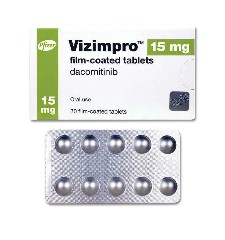
The mechanism of action of dacomitinib is to irreversibly bind and inhibit the tyrosine kinase activity of EGFR, thereby blocking the activation of the EGFR signaling pathway. EGFRsignaling pathway plays an important role in the growth and spread of various cancers, especially in NSCLC. Common EGFR mutations include L858R point mutations and exon 19 deletions. These mutations will lead to the continued activation of the EGFR signaling pathway and promote the proliferation and survival of cancer cells. Dacomitinib (Dacomitinib) can effectively inhibit these mutant EGFR, thereby exerting anti-tumor effects.
In the ARCHER 1050 clinical trial, dacomitinib was compared with the first-generation EGFR-TKIgefitinib (Gefitinib ). The research results show thatDacomitinib prolonged patients' progression-free survival (PFS), with the median PFS being 14.7 months, compared with 9.2 months with gefitinib. In addition, Dacomitinib also showed a certain overall survival (OS) advantage. However, the use of dacomitinib is associated with a higher incidence of adverse reactions, including rash, diarrhea, stomatitis, and nail lesions. Therefore, clinicians need to monitor their patients closely and manage them appropriately when using dacomitinib.
[ 免责声明 ] 本页面内容来自公开渠道(如FDA官网、Drugs官网、原研药厂官网等),仅供持有医疗专业资质的人员用于医学药学研究参考,不构成任何治疗建议或药品推荐。所涉药品可能未在中国大陆获批上市,不适用于中国境内销售和使用。如需治疗,请咨询正规医疗机构。本站不提供药品销售或代购服务。


