
.jpeg)
How effective is trametinib in curing melanoma?
The clinical curative effect of trametinib on melanoma, especially melanoma positive for BRAF V600E or V600K mutation, has been widely studied and recognized.
Trametinib is a reversible inhibitor of mitogen-activated extracellular signal-regulated kinase (MEK)1/2 , mainly by inhibiting the activity of MEK protein to block the MAPK signaling pathway, thereby inhibiting the proliferation and survival of tumor cells. In melanoma, mutations in the BRAF gene (especially the V600E and V600K mutations) can lead to an imbalance in intracellular signaling and promote the proliferation and growth of tumor cells. Trametinib acts on the downstream of this signaling pathway. When used in combination with a BRAF inhibitor (such as dabrafenib), it can form a dual blocking effect on the upstream and downstream, thereby more effectively inhibiting the growth of tumor cells.
Adjuvant therapy with trametinib combined with dabrafenib has shown significant efficacy in patients with BRAF V600 mutation-positive III stage melanoma. According to the results of the COMBI-AD trial, the combination of dabrafenib and trametinib significantly reduced the risk of recurrence and distant metastasis compared with placebo. Specific data include: the risk of recurrence is reduced by 48%, and the risk of distant metastasis is reduced by 44%; the OS rate (overall survival) in 8 years is 71% vs. 65% (placebo group); MSS rate (melanoma-specific survival rate) at 8 years was 76% vs 70% (placebo group). These data show that adjuvant treatment with trametinib combined with dabrafenib can significantly improve the long-term survival rate of patients with stage III melanoma and reduce the recurrence and metastasis of the disease.
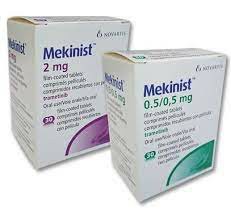
For patients with BRAF V600 mutation-positive unresectable or metastatic melanoma, the first-line treatment of trametinib combined with dabrafenib has also achieved significant efficacy. Multiple clinical trials have shown that this combination treatment regimen can significantly extend patients' progression-free survival (PFS) and overall survival (OS), and improve the objective response rate (ORR). For example, in a project targetingBRAF In the phase II clinical trial of patients with V600Emutation-positive melanoma, the ORR of dabrafenib combined with trametinib treatment group
The safety and tolerability of trametinib combined with dabrafenib in the treatment of melanoma is generally good. However, patients still need to pay attention to potential adverse reactions during use, including skin reactions, joint pain, nausea and vomiting, fatigue, etc. In addition, trametinib may also cause side effects such as hypertension, proteinuria, oral ulcers, and diarrhea. Most adverse reactions were mild to moderate, and most patients tolerated and continued treatment. For patients who experience serious adverse reactions, the dose needs to be adjusted or the drug discontinued in a timely manner.
It should be noted that although trametinib combined with dabrafenib can significantly improve the survival rate of melanoma patients and reduce the risk of recurrence and metastasis,The concept of "clinical cure" is usually used with caution in oncology. Due to the heterogeneity and complexity of melanoma, even if a patient achieves complete response (CR), there is no guarantee that they will never relapse. Therefore, long-term follow-up and monitoring are crucial for melanoma patients.
Treatment with trametinib plus dabrafenib does provide many patients with a chance of long-term survival and improves their quality of life. With continued treatment and monitoring, some patients are able to achieve long-term disease-free survival or even clinical cure.
[ 免责声明 ] 本页面内容来自公开渠道(如FDA官网、Drugs官网、原研药厂官网等),仅供持有医疗专业资质的人员用于医学药学研究参考,不构成任何治疗建议或药品推荐。所涉药品可能未在中国大陆获批上市,不适用于中国境内销售和使用。如需治疗,请咨询正规医疗机构。本站不提供药品销售或代购服务。


