
.jpeg)
The effects and efficacy of donanemab (donanemab-azbt)-Kisunla
Donanemab (donanemab-azbt)-KisunlaInjection via monthly injection has been approved for the treatment of Alzheimer's disease in adults with early symptomatic Alzheimer's disease (AD), including patients with mild cognitive impairment (MCI) and mild dementia-stage Alzheimer's disease, with demonstrated amyloid pathology. Kisunla is the first and only once-monthly amyloid plaque-targeted therapy with evidence to support stopping treatment after removal of amyloid plaques, which can reduce treatment costs and reduce infusions.
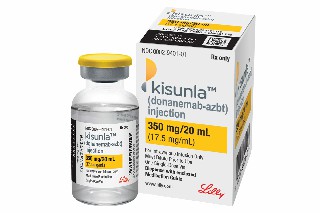
Donanemab-azbt in Kisunla is a humanized immunoglobulin gamma 1 (IgG 1) monoclonal antibody directed against the insoluble N-truncated pyroglutamate amyloid beta protein. The accumulation of amyloid beta plaques in the brain is a well-established pathophysiological feature of Alzheimer's disease. Donanemab-azbt reduces amyloid beta plaques, as shown in clinical studies.
Kisunla is given to patients via intravenous injection, that is, through a drip bag into a vein. This is an immunotherapy drug developed by the pharmaceutical company Eli Lilly and Company. Immunotherapy drugs are already used to treat different diseases, such as cancer. They tell the body's immune system to attack foreign cells or proteins and get rid of them so they don't cause any problems again.
In Kisunla's case, it teaches immune cells to recognize and clear away a protein called amyloid, which accumulates in Alzheimer's disease. The buildup of amyloid is thought to be toxic to brain cells, causing them to become sick and eventually die, leading to Alzheimer's symptoms. At the end of the clinical trial, three-quarters of the patients taking Kisunla successfully cleared amyloid from their brains.
[ 免责声明 ] 本页面内容来自公开渠道(如FDA官网、Drugs官网、原研药厂官网等),仅供持有医疗专业资质的人员用于医学药学研究参考,不构成任何治疗建议或药品推荐。所涉药品可能未在中国大陆获批上市,不适用于中国境内销售和使用。如需治疗,请咨询正规医疗机构。本站不提供药品销售或代购服务。


