
.jpeg)
Detailed explanation of the efficacy and side effects of Mobotinib (Mobosetinib) for specific NSCLC
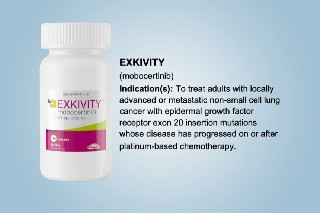
Mobocertinib (Mobocertinib), its trade name is Exkivity, is an oral drug carefully developed by Takeda Pharmaceutical Co., Ltd. Taking tyrosine kinase inhibitors (TKI), especially used to treat certain types of non-small cell lung cancer (NSCLC). As a third-generation EGFR (epidermal growth factor receptor) targeting drug, mobosetinib (mobosetinib) is mainly targeted at EGFR gene exon 20 insertion mutations NSCLC patients. This article will take an in-depth look at the effectiveness and possible side effects of Mobotinib.
Efficacy
Mechanism and targeting
Mobotinib is a well-designed, irreversible EGFR-TKI that is unique in that it specifically targets EGFR gene exon 20 insertion mutations. EGFR is a receptor tyrosine kinase that plays a key role in cell growth and differentiation, and mutated EGFR can drive abnormal cell proliferation, thereby promoting the development of cancer. Exon 20 insertion mutations are a relatively rare type of mutation, accounting for approximately 4-12% of all EGFR mutations. This mutation often exhibits resistance to conventional EGFR-TKIs, such as first- and second-generation drugs. Mobosetinib binds irreversibly to the mutated EGFR protein and inhibits its tyrosine kinase activity, thus blocking the signaling pathways of cancer cells and effectively inhibiting the growth and spread of cancer cells.
Clinical effects
Clinical trial data show thatmobosetinib is effective in treating EGFRexon20insertion mutationsNSCLCImpressive efficacy has been demonstrated in patients. In multiple clinical studies, mobosetinibhas shown a high objective response rate (ORR), which is the proportion of cancer tumors that partially or completely shrink. After the patient received treatment, the growth rate of the tumor was significantly slowed down, and the stabilization time of the disease was also significantly prolonged. These encouraging findings provide new treatment options and hope for those suffering from this specific type of mutated lung cancer.
Side effects
Althoughmobosetinib has shown remarkable efficacy in the treatment of EGFRexon20insertion mutationsNSCLC, it is also accompanied by a series of possible side effects. Here are some common side effects:
1.Gastrointestinal discomfort
Diarrhea: This is one of the most common side effects of mobosetinib and can lead to dehydration and electrolyte imbalance in patients. In severe cases, the dose may need to be reduced or temporarily discontinued.
2.Nausea and vomiting: Some patients experience nausea or vomiting after taking the medication, which can usually be managed by adjusting their diet or using antiemetic medications.
3.Loss of appetite: While taking mobosetinib, some patients may experience a loss of appetite, which may affect their nutritional intake.
4.Skin reaction
Rush: Rash is a common skin side effect that may appear as erythema, itching, etc. Most of the time, the rash is mild, but sometimes treatment may need to be adjusted.
Dry skin and itching: Some patients may experience dry and itchy skin, which may require the use of emollient or anti-allergy medications for relief.
5.Abnormal liver function: Mobotinib (mobosetinib) may cause abnormal liver function, such as elevated levels of transaminases (ALT and AST). This abnormality is usually reversible, but liver function needs to be monitored regularly during treatment to prevent the development of severe liver damage.
6.Pulmonary Toxicity: Although rare, mobosetinib may cause interstitial lung disease (ILD) or pneumonitis, a potentially serious side effect. If patients develop symptoms such as difficulty breathing, cough or fever, they should seek medical attention immediately.
7.Cardiotoxicity: Mobotinib (mobosetinib) may cause cardiotoxicity, including QT prolongation (electrocardiogram changes) and arrhythmias. These changes may increase the risk of sudden cardiac death and require regular ECG monitoring.
8.Other side effects
Fatigue: Patients may feel unusually tired during treatment, which is a common side effect of chemotherapy and targeted therapies.
Stomatitis:Mobosetinib may cause inflammation of the oral mucosa, manifesting as oral ulcers, pain and other symptoms.
Kidney function abnormalities: A small number of patients may develop kidney function abnormalities, including elevated blood creatinine levels, which need to be monitored with blood tests.
In summary, mobosetinib (mobosetinib) as a third-generation EGFR-TKI, provides a new treatment option for EGFRexon 20 insertion mutations NSCLC patients. Although it has shown significant clinical efficacy, it is also accompanied by a series of side effects. Therefore, patients should receive regular monitoring and follow-up from their doctors during treatment with Mobotinib to manage side effects in a timely manner and ensure the safety and effectiveness of the treatment. Patients should promptly inform their doctors of the occurrence of any side effects so that appropriate treatment can be carried out and the treatment plan can be adjusted.
[ 免责声明 ] 本页面内容来自公开渠道(如FDA官网、Drugs官网、原研药厂官网等),仅供持有医疗专业资质的人员用于医学药学研究参考,不构成任何治疗建议或药品推荐。所涉药品可能未在中国大陆获批上市,不适用于中国境内销售和使用。如需治疗,请咨询正规医疗机构。本站不提供药品销售或代购服务。


