
.jpeg)
Detailed instructions for Adagrasibu
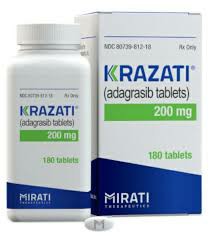
Adagrasib (Adagrasib) is a targeted therapy for non-small cell lung cancer (NSCLC) and colorectal cancer (CRC) with KRAS G12C gene abnormalities. Adagrasib reduces tumor growth by locking the KRAS protein in an inactive state. Adagrasiib tablets are taken twice daily. The KRAS gene produces a protein that acts like a switch, controlling cell growth and cell death. Abnormalities in the KRAS G12C gene may cause cancer cells to grow and spread in the body. Adagrasiib helps stop tumor growth by inhibiting KRAS G12C.
Indications: United StatesFDA approves adagrasib for the treatment of adults with:
Non-small cell lung cancer (NSCLC) that has spread to other parts of the body or cannot be removed with surgery and has the KRAS G12C mutation as determined by a test approved by the U.S. FDA. Patients must have previously tried at least one systemic therapy. In non-small cell lung cancer, the drug is used as a single agent.
Metastatic colorectal cancer (CRC) that has spread to other parts of the body or cannot be removed with surgery and has the KRAS G12C mutation as determined by FDA-approved testing. Adagrasiib is used in combination withcetuximab. Patients must have tried fluoropyrimidine-, oxaliplatin-, and irinotecan-based chemotherapy.
Usage and dosage:
Usual doses of adagrasib for adults with non-small cell lung cancer
Recommended dose:600 mg orally twice daily
Usual doses of adagrasib in combination with cetuximab for the treatment of colorectal cancer in adults
CRC Recommended Dose: 600 mg PO twice daily
Side effects:
When this drug is used to treat NSCLC, 25% or more of patients experience these side effects. Laboratory blood tests may also change. Common adagrasibside effects may include nausea, diarrhea, vomiting, tiredness, muscle and bone pain, liver problems, difficulty breathing, loss of appetite, swelling, decreased urination, and feeling tired or short of breath.
When used in combination with cetuximab for CRC treatment, these side effects occur in 25% or more of patients. Common adagrasibside effects include rash, nausea, diarrhea, vomiting, tiredness, muscle and joint pain, liver problems, headache, dry skin, abdominal pain, decreased appetite, swelling, cough, and low iron blood levels.
Get emergency medical help if you develop signs of an allergic reaction, such as hives, difficulty breathing, or swelling of your face, lips, tongue, or throat.
Adagrasiib may cause other serious side effects. Contact your doctor right away if you have: nausea, diarrhea, or vomiting; shortness of breath, cough, or fever; fast or pounding heartbeat, chest fluttering, sudden dizziness (like you might pass out); stomach bleeding—bloody or tarry stools, coughing up blood, or vomit that looks like coffee grounds or liver problems - Loss of appetite, stomach pain (upper right), tiredness, itching, dark urine, clay-colored stools, jaundice (yellowing of the skin or eyes). This is not a complete list of side effects, and other side effects may occur.
Things to note:
Gastrointestinal side effects: This medicine may cause diarrhea, nausea, and vomiting. Seek medical attention. Depending on the severity of your symptoms, your dose may be reduced or permanently stopped.
QTc interval prolongation: This drug should not be used with other products known to have the potential to prolong the QTc interval. If you are at risk or are taking drugs known to prolong the QT interval, we will monitor your EKG and electrolytes, especially potassium and magnesium. Your healthcare provider will correct any electrolyte abnormalities.
Liver problems: Your healthcare provider will monitor liver laboratory tests before starting this medication, monthly after you start this medication, and as clinically indicated.
Lung problems: Monitor for new or worsening respiratory symptoms.
INTERACTIONS: Tell your doctor about all the drugs you take, including prescription and over-the-counter medicines, vitamins, and herbal supplements. Adagrasiib can affect the way other medicines work, and other medicines can affect the way adagrasib works.
Drugs that may interact with adagrasib include
Potent CYP3A4 inducers: Avoid concurrent use.
Potent CYP3A4 inhibitors: Avoid concurrent use until adagrasib concentrations have reached steady state (after approximately 8 days).
Sensitive CYP3A4 Substrates: Avoid concurrent use with sensitive CYP3A4 substrates.
Sensitive CYP2C9 or CYP2D6 substrates or P-gp substrates: Avoid concurrent use with sensitive CYP2C9 or CYP2D6 substrates or P-gp substrates as minimal concentration changes may result in serious adverse reactions.
Drugs that prolong QT interval: Avoid use with this drug.
This is not a complete list of side effects, and other side effects may occur.
Storage: Store at room temperature 68°F to 77°F (20°C to 25°C). Tablets come in a child-proof container. The container contains a desiccant to keep the medicine dry. Do not remove the desiccant after opening the container. Do not eat or swallow desiccant.
[ 免责声明 ] 本页面内容来自公开渠道(如FDA官网、Drugs官网、原研药厂官网等),仅供持有医疗专业资质的人员用于医学药学研究参考,不构成任何治疗建议或药品推荐。所涉药品可能未在中国大陆获批上市,不适用于中国境内销售和使用。如需治疗,请咨询正规医疗机构。本站不提供药品销售或代购服务。


