
.jpeg)
How effective is cabozantinib in the treatment of advanced lung cancer?
Cabozantinib, as a multi-target tyrosine kinase inhibitor, has been proven to have significant therapeutic effects in a variety of solid tumors, including advanced lung cancer.
RET Rearrangement is a rare genetic mutation in lung cancer, but cabozantinib has shown significant efficacy in treating this type of lung cancer. In an open-label, single-arm Phase II trial, 26 patients with RET-rearranged NSCLC received cabozantin The results showed that although no patient achieved a complete response, 28% of the patients responded to the treatment, and the tumor shrinkage rate was very high (≥70% of the patients had a tumor shrinkage of 30%). Additionally, the median PFS was 5.5 months, and the median OS was 9.9 months. These data indicate that cabozantinib has a good efficacy in patients with RET rearranged lung cancer.
For EGFR wild-type lung cancer patients, cabozantinib has also shown certain efficacy. Especially when used in combination with erlotinib (Tarceva), survival was significantly prolonged. Specifically, the survival time of the combination group was 13.3 months, while that of the cabozantinib alone group was 9.2 months, and that of Tarceva alone was 5.1 months. This shows that cabozantinib can play an important role in combination therapy and improve patient survival.
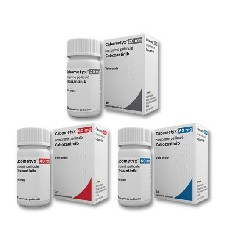
For EGFR-TKI-resistant lung cancer patients, cabozantinib has also shown good efficacy. In a II phase clinical trial, cabozantinib was combined with erlotinib to treat TKIEGFR-positive advanced NSCLC whose disease progressed after targeted therapy.Patients, the disease control rateDCR67.6%. This shows that cabozantinib has certain potential in solving the problem of EGFR-TKI resistance.
The broad effectiveness of cabozantinib is reflected not only in the treatment of RET rearranged lung cancer, but also in the treatment of a variety of other solid tumors. It has been proven effective against kidney cancer, medullary thyroid cancer, liver cancer and many other cancers. This broad effectiveness is due to the multi-target properties of cabozantinib, which can inhibit MET, VEGFR1/2/3, ROS1, Multiple tyrosine kinase receptors including pan>RET, AXL, NTRK, KIT, etc. These receptors play important roles in tumorigenesis, metastasis, angiogenesis, and microenvironment maintenance. Therefore, cabozantinib can prevent tumor growth and spread by inhibiting the activity of these receptors.
Although cabozantinib has shown significant clinical effectiveness in the treatment of advanced lung cancer, its side effects and tolerability issues also need to be paid attention to. Common side effects include diarrhea, fatigue, high blood pressure, hand-foot syndrome, etc. However, these side effects can usually be alleviated by reducing or interrupting treatment. In addition, most patients need to reduce the dose to 60mg/day or even 20mg/day due to severe adverse reactions. However, low-dose treatment also shows better efficacy, which shows that cabozantinib can still maintain its efficacy after dose reduction.
In summary, cabozantinib has shown significant clinical effectiveness in the treatment of advanced lung cancer, especially for patients with RET rearranged lung cancer and EGFR wild-type and EGFR-TKIPatients with drug-resistant lung cancer. In addition, cabozantinib’s multi-target properties make it have broad therapeutic application prospects. However, when using cabozantinib, it is also necessary to pay attention to its side effects and tolerability issues, and adjust and optimize the treatment plan according to the specific conditions of the patient.
[ 免责声明 ] 本页面内容来自公开渠道(如FDA官网、Drugs官网、原研药厂官网等),仅供持有医疗专业资质的人员用于医学药学研究参考,不构成任何治疗建议或药品推荐。所涉药品可能未在中国大陆获批上市,不适用于中国境内销售和使用。如需治疗,请咨询正规医疗机构。本站不提供药品销售或代购服务。


