
.jpeg)
Detailed explanation of the role and efficacy of midostaurin
Midostaurin (Midostaurin) is a multikinase tyrosine kinase inhibitor mainly used to treat certain types of hematological malignancies, especially acute myeloid leukemia (AML) and aggressive systemic mastocytosis (ASM). Its mechanism lies in its ability to target and inhibit multiple receptor tyrosine kinases, including FLT3, platelet-derived growth factor receptor (PDGFR), cyclin-dependent kinase 1 (CDK1), SRC, c-KIT, and vascular endothelial growth factor receptor (VEGFR). These receptors perform important functions in normal cells, but in some cancers, their abnormal activation leads to excessive cell proliferation and survival.
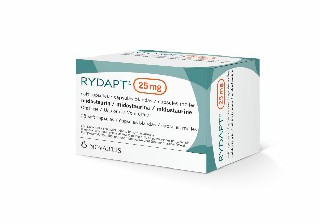
Midostaurin's mechanism of action is primarily based on targeting these abnormally activated kinases. When receptors such as FLT3 are activated, a series of signaling cascade reactions are triggered, which promote the survival and proliferation of tumor cells. By inhibiting the activity of these kinases, midostaurin can effectively block this abnormal signaling and induce the apoptosis of leukemia cells and mast cells. This mechanism of action makes it an important drug for the treatment of this type of cancer, especially in patients with FLT3 mutation-positive AML.
In clinical trials, midostaurin has shown positive effects in extending survival in patients with advanced systemic mastocytosis (SM) and acute myeloid leukemia. Although midostaurin did not show significant differences in other pharmacodynamic effects in improving patients' QTc interval compared with placebo, it did bring better prognosis and quality of life to patients as a combination treatment with chemotherapy.
In addition, midostaurin and its main active metaboliteCGP62221 and CGP52421 can also inhibit the activity of multiple receptors such as protein kinase Cα (PKCα), VEGFR2, KIT and PDGFR. Based on preliminary in vitro studies, midostaurin has also shown interactions with organic anion transporter (OATP) 1A1 and multidrug resistance protein (MRP)-2. This provides possible research directions to further understand its impact on drug metabolism and drug resistance.
[ 免责声明 ] 本页面内容来自公开渠道(如FDA官网、Drugs官网、原研药厂官网等),仅供持有医疗专业资质的人员用于医学药学研究参考,不构成任何治疗建议或药品推荐。所涉药品可能未在中国大陆获批上市,不适用于中国境内销售和使用。如需治疗,请咨询正规医疗机构。本站不提供药品销售或代购服务。


