
.jpeg)
Structure and synthesis of midostaurin
Midostaurin (Midostaurin) is an innovative oral small molecule kinase inhibitor mainly used to treat acute myeloid leukemia (AML) and systemic mastocytosis (SM). Its targeting effect mainly focuses on FLT3 gene mutations and multiple other signaling pathways, which are closely related to the survival and proliferation of cancer cells.
From a chemical structure perspective, the molecular formula of midostaurin isC35H30N4O4, with a molecular weight of approximately 570.65 g/mol. Its structure contains multiple benzene rings and amine functional groups, giving it specific biological activity. The main mechanism of midostaurin in the body is by inhibiting the activity of FLT3 tyrosine kinase, thereby interfering with cell proliferation signaling, ultimately leading to the apoptosis of cancer cells. In addition, midostaurin also inhibits several other kinases, including KIT and PDGFRα, making it potentially useful in the treatment of diseases related to these kinases.
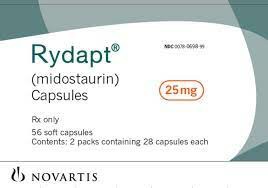
In terms of synthesis, midostaurin can be synthesized through a multi-step reaction. First, intermediates are generated by reacting appropriate aromatic compounds with amines. This is followed by a multi-step chemical reaction, including amination, amination, etc., to ultimately form its active compound. The specific compound synthesis route may involve some key reaction steps, such as condensation reaction, introduction and removal of protective groups, selective hydrogenation, etc. Optimization of these steps is critical to improve yield and purity.
In clinical application of midostaurin, patients usually take the drug orally, and the dosage is adjusted according to the specific condition and treatment plan. Because it targets specific molecular targets, clinical trials have shown that midostaurin has significant efficacy in achieving complete or partial remission. Especially in AML patients carryingFLT3 mutations, the use of midostaurin prolonged progression-free survival. This result makes it one of the important drugs in the treatment of acute myeloid leukemia.
[ 免责声明 ] 本页面内容来自公开渠道(如FDA官网、Drugs官网、原研药厂官网等),仅供持有医疗专业资质的人员用于医学药学研究参考,不构成任何治疗建议或药品推荐。所涉药品可能未在中国大陆获批上市,不适用于中国境内销售和使用。如需治疗,请咨询正规医疗机构。本站不提供药品销售或代购服务。


