
.jpeg)
Are patients with advanced lung adenocarcinoma suitable for platinib treatment?
Whether patients with advanced lung adenocarcinoma are suitable for platinib treatment mainly depends on whether the patient has specific RET gene mutations or fusions. Platinib, as a highly selective RET inhibitor, is mainly used to treat patients with RET gene fusion-positive locally advanced or metastatic non-small cell lung cancer (NSCLC), and lung adenocarcinoma is a major type of non-small cell lung cancer.
Platinib may be an appropriate treatment option for patients with advanced lung adenocarcinoma if genetic testing results reveal the presence of a RET gene fusion mutation. Platinib can precisely target RET gene mutations, thereby effectively inhibiting the proliferation and spread of tumor cells. Platinib may provide new treatment opportunities for patients with advanced lung adenocarcinoma who have received traditional treatments such as platinum-based chemotherapy but failed to respond. It can help these patients prolong survival and improve quality of life.
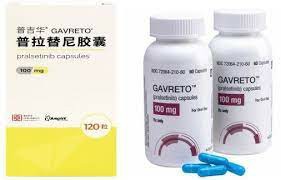
In clinical trials, platinib has shown promising efficacy in patients with RET fusion-positive non-small cell lung cancer, including patients with lung adenocarcinoma. The specific manifestations include significant reduction in tumor volume, relief of clinical symptoms, and prolongation of survival. For both treatment-naïve and treatment-experienced patients, platinib showed a higher objective response rate (ORR) and longer progression-free survival (PFS) and overall survival (OS).
Before taking platinib, patients must undergo RET gene testing to confirm the presence of RET gene fusions or mutations. This is a critical step to ensure patients benefit from platinib treatment.
Although Platinib is effective, it may also cause some side effects, such as hypertension, interstitial lung disease/Non-infectious pneumonia, poor wound healing, etc. Therefore, it is necessary to closely monitor the patient's physical condition and side effects during the treatment process, and adjust the treatment plan in a timely manner.
Each patient's condition and physical condition are unique, so treatment plans need to be individualized based on the patient's specific circumstances. Patients should use drugs rationally under the guidance of a doctor, and follow the doctor's instructions for necessary examinations and follow-up.
[ 免责声明 ] 本页面内容来自公开渠道(如FDA官网、Drugs官网、原研药厂官网等),仅供持有医疗专业资质的人员用于医学药学研究参考,不构成任何治疗建议或药品推荐。所涉药品可能未在中国大陆获批上市,不适用于中国境内销售和使用。如需治疗,请咨询正规医疗机构。本站不提供药品销售或代购服务。


