
.jpeg)
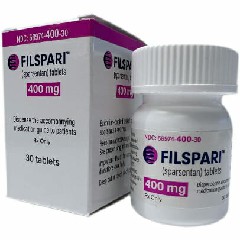
Detailed explanation of the efficacy and role of sparsentan/sparsentan
Sparsentan is a new drug mainly used to treat primary immunoglobulin A nephropathy (IgAN). As a dual antagonist of endothelin type A receptor (ETAR) and angiotensin II (Ang II) type 1 receptor (AT1R), this drug has a unique mechanism of action and clinical application value.
The main mechanism of action of sparsentan is to simultaneously block two important vasoconstrictor factors-Ang II and endothelin 1 (ET-1), both of which play key roles in the pathogenesis of IgAN. IgAN is a chronic kidney disease characterized by the overproduction of galactose-deficient IgA1 (Gd-IgA1) antibodies. These antibodies will activate mesangial cells, leading to the production of more ET-1 and Ang II, forming a vicious cycle, ultimately damaging the glomerular filtration barrier and causing proteinuria and hematuria.
By antagonizing ETAR and AT1R, sparsentane can effectively reduce proteinuria levels and improve renal function in IgAN patients. Studies have shown that the affinity of sparsantane for ETAR and AT1R is Ki=12.8 nM and Ki=0.36 nM respectively, and its selectivity is 500 times higher than endothelin type B and angiotensin II subtype 2 receptors, proving its specificity in treatment.
In clinical trials, sparsentane demonstrated good safety and efficacy. In the 36th week of observation, the use of sparsentane showed a certain relationship with the reduction of urine protein/creatinine ratio (UPCR), but this relationship was not statistically significant. In addition, the observation of adverse reactions such as hypotension and peripheral edema did not show an obvious E-R relationship.
Although the side effects of sparsentane are relatively controllable, you still need to be alert to the possible QTc prolongation. In healthy subjects, the maximum mean QTc prolonging effects observed were 8.8 ms and 8.1 ms at doses of 800 mg and 1600 mg, respectively. However, the mechanism of QTc prolongation has not been elucidated and clinically relevant QTc prolongation is not expected at recommended doses.
Some adverse reactions may occur when using sparsentane, including hepatotoxicity, embryo-fetal toxicity, hypotension, acute kidney injury, hyperkalemia, and fluid retention. Therefore, patients need to be strictly monitored and managed during treatment.
In summary, sparsentan, as a multi-target drug, demonstrates the potential for primary immune globulinA good prospect in the treatment of nephropathy. Through dual antagonism of ETAR and AT1R, sparsentan can not only effectively reduce proteinuria, but also provide a new treatment option for improving the overall prognosis of patients. In future clinical applications, further research will help optimize its use strategy and monitor adverse reactions, thereby improving the therapeutic effect.
[ 免责声明 ] 本页面内容来自公开渠道(如FDA官网、Drugs官网、原研药厂官网等),仅供持有医疗专业资质的人员用于医学药学研究参考,不构成任何治疗建议或药品推荐。所涉药品可能未在中国大陆获批上市,不适用于中国境内销售和使用。如需治疗,请咨询正规医疗机构。本站不提供药品销售或代购服务。


