
.jpeg)
Brigatinib (Brigatinib) new drug for ALK-positive non-small cell lung cancer
On May 22, 2020, the U.S. Food and Drug Administration approved brigatinib (ALUNBRIG, ARIAD Pharmaceuticals Inc.) for testing in adult patients with anaplastic lymphoma kinase (ALK)-positive metastatic non-small cell lung cancer (NSCLC) tested by a U.S. FDA-approved testing facility. At the same time, the US FDA also approved the Vysis ALK Break Apart FISH probe kit (Abbott Molecular Incorporated) as a companion diagnostic to brigatinib.
ALTA 1L (NCT02737501) is a randomized (1:1), open-label, multicenter trial of adult patients with advanced ALK-positive NSCLC who have not received prior ALK-targeted therapy. The trial requires patients to undergo ALK rearrangement according to local standards of care testing. The trial randomly assigned 275 patients to receive brigatinib 180 mg orally once daily and a 7-day run-in period at 90 mg once daily (n=137) or crizotinib 250 mg orally twice daily (n=138). A subset of clinical samples were retrospectively tested using the Vysis ALK Break Apart FISH Probe Kit. Of the enrolled patients, 239 patients had a positive result using the Vysis diagnostic test (20 patients had a negative in-center result and 16 patients had a negative in-center result).
The primary efficacy outcome measure was progression-free survival (PFS) as assessed by a blinded independent review committee RECIST 1.1. The other efficacy outcome measure assessed by BIRC was confirmed overall response rate (ORR).
The estimated median PFS for brigatinib-treated patients was 24 months (95% CI: 18.5, NE), compared with 11 months (95% CI: 9.2, 12.9) for crizotinib-treated patients (HR 0.49; 95% CI: 0.35, 0.68; p<.0001). Confirmed ORRs were 74% (95% CI: 66, 81) and 62% (95% CI: 53, 70), respectively.
The most common adverse reactions of brigatinib (≥25%) are diarrhea, fatigue, nausea, rash, cough, myalgia, headache, hypertension, vomiting, and dyspnea.
In March 2022, brigatinib was officially approved by the National Medical Products Administration (NMPA) as a single agent for the treatment of patients with anaplastic lymphoma kinase (ALK)-positive locally advanced or metastatic non-small cell lung cancer (NSCLC). This approval marks brigatinib becoming a new treatment option in the Chinese market, bringing new hope to patients with ALK-positive NSCLC.
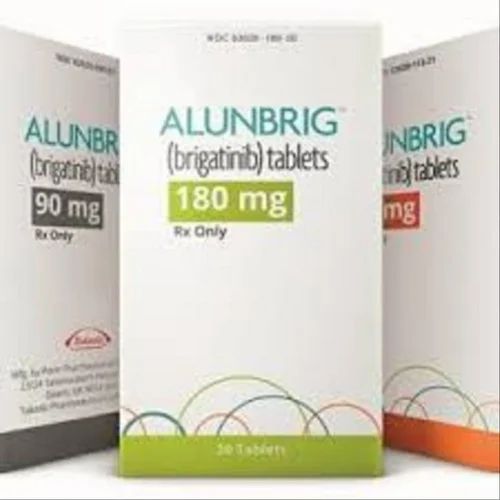
The recommended dose of brigatinib is 90 mg orally once daily for the first 7 days; then increase to 180 mg orally once daily. Brigatinib can be taken with food or alone.
In summary, brigatinib, as an innovative drug forALK-positive non-small cell lung cancer, has significant clinical efficacy and controllable safety. Its launch will further meet the unmet needs of Chinese patients with ALK-positive advanced non-small cell lung cancer and help open up a new treatment landscape in related fields.
[ 免责声明 ] 本页面内容来自公开渠道(如FDA官网、Drugs官网、原研药厂官网等),仅供持有医疗专业资质的人员用于医学药学研究参考,不构成任何治疗建议或药品推荐。所涉药品可能未在中国大陆获批上市,不适用于中国境内销售和使用。如需治疗,请咨询正规医疗机构。本站不提供药品销售或代购服务。


